

Nicaea and the Future of Anglicanism
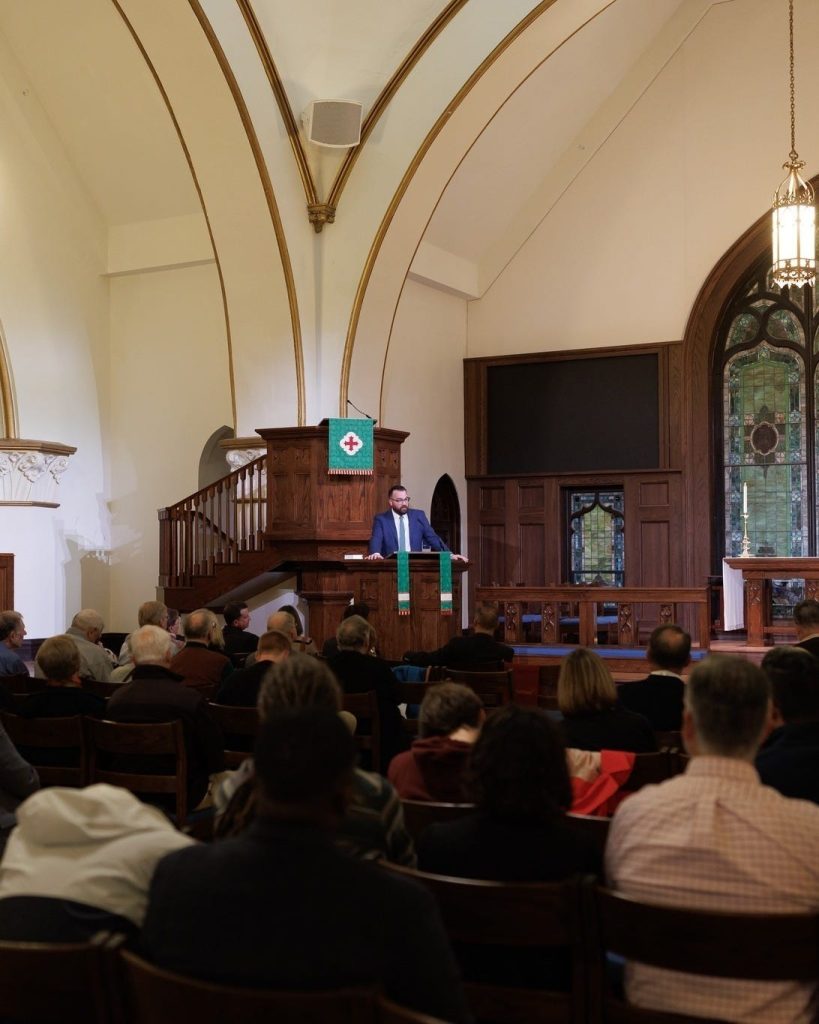
On October 30th Matthew Barrett delivered the John Rodgers Lecture series at Trinity Anglican Seminary. Dr. Barrett is Research Professor of Theology at Trinity Anglican Seminary. He is Theologian-in-Residence for Anselm House at St. Aidan’s Anglican Church. He is the author of award winning books, such as Simply Trinity (Baker) and On Classical Trinitarianism (IVP Academic). He is currently writing a Systematic Theology (Baker Academic).
The following is his message, which was first published on Dr. Barrett’s substack.
Some of you may know that earlier this year I became Anglican and shared some of my story as to why. Even before I did so, some warned me against Anglicanism, saying, “Look at what a mess it is! How can you seriously be considering this?” Those voices continue even now that I am Anglican. Your story may be different from mine, but I don’t doubt that some of you are feeling the weight of a watching world after events over the last several weeks, whether it be potential scandal in the ACNA or schism in the wider Anglican communion. Perhaps you feel discouraged, even a little sheepish about wearing the Anglican badge. You might even feel like if there was ever a time not to hear a lecture on Anglicanism, this is it.
 Several years ago, I was a pastor at a Baptist church. One Sunday after church, my wife Elizabeth pulled me aside and said, “I love you, but you need to know that spiritually speaking I’m not making it. I am dying on the inside.” I feared asking her why because I had the suspicion that she might give the same reasons that were deep down in my soul as well. And sure enough, I was right. She said, “I know you’ve tried to make a difference, but we’ve been at this a long time and there’s no objective ground under us.” She then went on to point things out that I knew all too well. We might call it the great absence. The absence of ancient liturgy, communion that’s sacramental, weekly profession of the Nicene Creed, and external ecclesiastical accountability and discipline when sin enters the leadership of a church that otherwise thinks it is autonomous. And yet, my wife’s cry was not so much about this or that issue as it was a cry for something timeless, something enduring, something…true to reality. She knew that should a storm come, and it would, we would not have an anchor to ground us. I knew she was right.
But what about those skeptics—“Look, it’s a mess!” they said. My wife caught me up in the middle of the night reading article after article. “Another article is not going to take away the turmoil within you,” she said. When I thought I could take no more, our Lord had mercy on my soul. I was speaking to a friend and he said, “Matthew, if you are to become Anglican, you must do so for the right reason.” “What is that?” I asked. “Because it’s true.” I was embarrassed. Here I was, a theologian, but I needed him to state the obvious: truth. “If the ideal is true, then you’re home,” he said. “And then, roll up your sleeves, and get to work.” He was right. I was a lot like Peter. I was caught somewhere between the boat behind me and Jesus in front of me, and then I started looking around. The wind was blowing, the waves were high, and the sky was dark. When all I really needed was to look ahead and keep my eyes on my Lord.
You may also feel that way with everything happening in Anglicanism, but I am so glad the Lord led me to Anglicanism. However imperfect things may be, we actually have a threefold office shaped by a historic episcopacy, one that has supported the church through the worst storms of heresy, apostacy, and immorality. That ecclesiastical structure is so counter-cultural because at the end of the day it is built for justice in a world that only cares about image. When done right, it’s commitment to justice protects its members from being sacrificed on the altar of image, and that is not something you can say about every tradition. As Bryan Hollon said recently, as Anglicans we have a canonical way to administer disciple, and discipline, as painful as it may be, is an indicator of good health.
This year, 2025, marks the 1700th anniversary of Nicaea, and so we celebrate! Yet did you know that it took decade upon decade for the bishops to move the church into the peaceful waters of doctrinal purity?. Imagine living in a world where you go to church on Sunday only to discover that your priest has you singing songs where worship of the Son is excluded? Let’s not forget, heresy by definition comes from within the church. In the 4th century the winds of Arianism were blowing hard against the walls of the church and from the inside. To give you an idea of the tumultuous nature of this storm, Basil once wrote to Athanasius afraid the church might not survive, calling on him in that hour to guide the church back to harbor.
…the whole church is undone. And you [Athanasius] see everything in all directions in your mind’s eye like a man looking from some tall watch tower, as when at sea many ships sailing together are all dashed one against the other by the violence of the waves, and shipwreck arises in some cases from the sea being furiously agitated from without, in others from the disorder of the sailors hindering and crowding one another. …What capable pilot can be found in such a storm? Who is worthy to rouse the Lord to rebuke the wind and the sea?[i]
Did you know that Athanasius would not live to see this sea calm? He died before he could see bishops gather in Constantinople in 381, almost sixty years after Nicaea, to confess what we now call the Nicene Creed. Can you imagine how encouraged Basil might have been if the Lord had given him a vision of the future? If only he could see a day like ours when Anglican churches all over the world gather to trinitarian Christianity, which Basil worried would not survive.
I did not plan the timing of this lecture to coincide around the current crisis, and my aim is not to address it. However, perhaps this is an opportunity to acquire a renewed perspective on all that is good, true, and beautiful about his church. I believe that Anglicanism, whatever its challenges from year to year, is best equipped to carry the torch of Nicene Christianity forward.
That is a bold claim, but if I didn’t believe it, I wouldn’t have become Anglican in the first place. So let me share with you why.
1. Nicene trinitarianism is intrinsic to the bloodstream of the Anglican church
For some of you who are cradle Anglicans, forgive me if it seems like I am stating the obvious, but I have a certain exhilaration over what can sometimes be taken for granted: The Nicene Creed has been baked into Anglicanism from the beginning. Yet it’s not merely the fact that Nicaea is present; it’s the way Nicaea is baked into Anglicanism that is significant. Since this is the John Rogers lecture, a lecture designed to retrieve the heritage of the English Reformation, consider the formularies with me.
The Articles of Religion that Thomas Cranmer labored over not only open with the doctrine of the Trinity, but (what we now call) Article 8 says, “The Three Creeds, Nicene Creed, Athanasius’s Creed, and that which is commonly called the Apostles’ Creed, ought thoroughly to be received and believed: for they may be proved by most certain warrants of Holy Scripture.”[ii] Due in part to this Article, others like John Jewel could make his famous case for the catholicity of the English church, claiming its churches have not given way to heretical innovations but stand in the stream of the one holy catholic and apostolic church.
 I can’t help but glow with great affection over Article 8. It is so amazing to me because I am coming from the
a Southern Baptist denomination where (1) creeds are often looked at with serious suspicion due to an irrevocable, intrinsic biblicism, (2) most churches do not say the Nicene creed together each Sunday morning, (3) some of its most prominent theologians are permitted to subordinate the Son, thereby betraying the very point of the creed, and (4) its executive committee has officially rejected Nicene creed’s inclusion in the Baptist Faith and Message.
I don’t say all that to be triumphalist (I endured the pain of it all for two decades), but I mention it to give you a sense of the immense gratitude within me when I read Article 8.[iii] Whatever challenges Anglicanism faces today, Article 8 has spared Anglican churches from subordinationist heresies not all that different from what the bishops of Nicaea encountered in the fourth century. No doubt, if we had not been spared by the foresight of the English reformers, Anglican institutions like this one would be stained and the parishes that its graduates serve would be plagued by a divisiveness that results from doctrinal infidelity.
Yet the ecclesiastical significance of Article 8 is deeper still.
When the English reformers included Article 8, they were setting in motion a catholicity for the priesthood on which the health of the church would depend. To this day, at the ordination of every priest, the bishop leads the church to confess the Nicene Creed before their future priest. In the bishop’s exhortation that follows, he implores the ordinand to remember “how great is this treasure committed to your charge.” The bishop calls on the ordinand to a paternal care for the children God has entrusted to him.
“Work diligently, with your whole heart, to bring those in your care into the unity of the faith and of the knowledge of God, and to maturity in Christ, that there may be among you neither error in religion nor immorality in life.”[iv]
The unity of the faith is not one that bends to the priest’s own liking or agenda, nor is it one in which an autonomous body of believers decide of themselves whether they will or will not abide by that faith. The unity of the faith entrusted to the priest is one handed down, a Nicene tradition to which the priest and the people alike are held to account. It’s disciplinary presence certainly is meant to weigh heavy on the conscience of the priest at ordination, but its presence is also a reservoir of assurance. Should he abide by the unity of this Nicene faith, his people will participate in peace, both with God and with one another, bound together by the knowledge of God.
The presence of his bishop should not be overlooked. As the bishops submits this priest to the Nicene faith, he does so according to the catholicity of the episcopate and its canon law. His authority, in other words, is not one original to himself; he is no maverick, as apparent when he subscribes “without reservation to the Oath of Canonical Obedience.”[v]
In this way, Anglicanism embodies an apostolic heritage. In the 2nd century, Gnosticism seeped in, tempting Christians to think the Gnostics held the true secrets of Christianity. They claimed to hold the key that unlocks the Jesus and the scriptures the church had kept from them. Bishop Irenaeus of Lyon was alarmed to say the least. The Gnostic claim was shocking to Irenaeus because it so violated the proximity of his own episcopal lineage as a disciple of Polycarp who was himself a disciple of the apostle John.
What is so telling is Irenaeus’ default response. In Against Heresies he says, there is a
“tradition derived from the apostles, of the very great, the very ancient, and the universally known Church founded and organized at Rome by the two most glorious apostles, Peter and Paul, as also [by pointing out] the faith preached to men, which comes down to our time by means of the successions of the bishops.”[vi]
Irenaeus does not think orthodox is a matter of each’s church’s individual preference either.
“For it is a matter of necessity that every Church should agree with this Church, on account of its preeminent authority, that is, the faithful everywhere, inasmuch as the apostolical tradition has been preserved continuously by those who exist everywhere.”[vii]
How will Irenaeus confirm that the church retains the true deposit of the faith? By means of a laborious list, chronicling the succession of bishops that have preserved the faith one for all entrusted to the saints.
“The blessed apostles, then, having founded and built up the Church, committed into the hands of Linus the office of the episcopate. Of this Linus, Paul makes mention in the Epistles to Timothy. To him succeeded Anacletus; and after him, in the third place from the apostles, Clement was allotted the bishopric.”[viii]
Irenaeus then goes on to list bishop after bishop, and then he concludes,
“In this order, and by this succession, the ecclesiastical tradition from the apostles, and the preaching of the truth, have come down to us. And this is the most abundant proof that there is one and the same vivifying faith, which has been preserved in the Church from the apostles until now, and handed down in truth.”[ix]
Why mention this? The truth of the apostolic tradition, out of which the Trinity is unleashed on the world, is one preserved and perpetuated not merely by teaching but by means of an office—a bishopric—intended to safeguard that teaching.[x] The church knew as much. By the fourth century that succession of bishops required a council at Nicaea to discipline those in the church teaching a Trinity untrue to that same apostolic tradition.
The truth of the apostolic tradition, out of which the Trinity is unleashed on the world, is one preserved and perpetuated not merely by teaching but by means of an office—a bishopric—intended to safeguard that teaching.
Yet there is a deeper point I am driving at.
My breaking point came when I realized that I was a walking cognitive contradiction. I was all too happy to be catholic on the doctrine of God and Christ, while defaulting to modern instincts on ecclesiology, instincts that undermined the conciliar authority on which the church relied to ensure every church’s accountability to the God and Christ of the creed. As one friend said to me, “Even if you could convince the powers that be to accept Nicaea, you do not have the polity needed to ensure that otherwise autonomous churches will confess that creed and its proper meaning in the liturgy of their churches. In fact, if you, a Baptist, had been alive in the fourth century, even if you would have found Nicaea’s doctrine agreeable, you would have had to protest Nicaea for its conciliar authority, that is, simply for being a council.”
I discovered that I did not have the right instincts—catholic instincts. The truth of Anglicanism shines bright precisely at this point. Whatever reform may be required at the present moment, we have an episcopate structure that is inherited from the one holy catholic and apostolic church, one equipped to protect us from heresy and lead us into the knowledge of God, and for that we can be immensely grateful lest we take this gift for granted.
2. If the sacraments are the church’s gateway to participation in the life of the holy Trinity, then Anglicanism is prepared to usher us into that trinitarian life by means of its sacramental liturgy.
The Nicene Creed is not only stamped onto the foreheads of the clergy, but it is the key that unlocks the Eucharist liturgy for the laity. English reformers like Cranmer infused Nicaea into the hearts of every person participating in the body and blood of our Lord, making the Nicene Creed a most practical means to communion with the Father through the Son by the Spirit.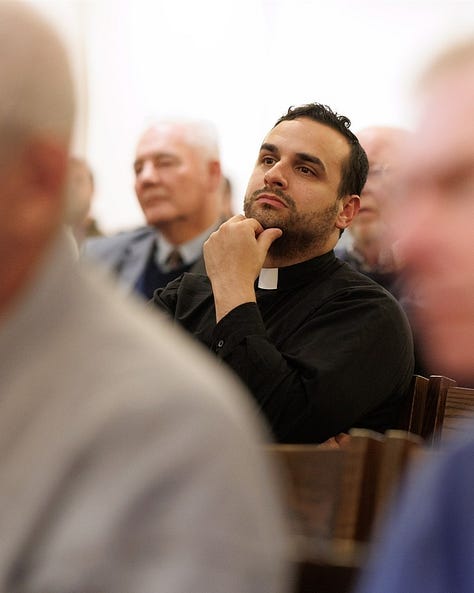
Before I became Anglican, I thought, “If we just teach Nicene trinitarianism over and over again, that will be enough.” And so, I did. But I failed to see the obvious. True, it is critical to teach the church the Trinity (at St. Aidan’s Anglican Church we spent 14 homilies during Ordinary Time expositing through the creed).
However, the church’s most organic encounter with the Trinity is in the sacraments. I was guilty of missing the obvious: when our Lord Jesus Christ prepared to go to the cross—that crucible of Christianity—out of all things he could have said or done with his disciples, he chose to institute the sacrament of the Eucharist. On the other side of that grave, the next time he would leave his disciples again, he instituted the sacrament of baptism and in the name of the Father, Son, and Spirit.
At Christianity’s most pivotal moment, why would the sacraments become the bookends of the Son’s mission from the Father? The sacraments ensure the church is not merely learning about the Trinity but participating in the Trinity. It is the fitting sequel to all of Jesus’s teaching whereby he revealed the way to the Father from whom he is eternally begotten.
A church that does not believe the sacraments are actually sacraments should not be surprised if their people are indifferent to the mystery of the holy Trinity.
If I am right, then a church that does not believe the sacraments are actually sacraments should not be surprised if their people are indifferent to the mystery of the holy Trinity. If the sacraments are visible signs of invisible grace, then the Thirty-nine Articles are right to say that they cannot be mere “badges or tokens of Christian men’s profession.” They must be more. They must be, and I quote, “certain sure witnesses, and effectual signs of grace, and God’s good will towards us, by the which he doth work invisibly in us, and doth not only quicken, but also strengthen and confirm our Faith in him.”[xi]
For example, consider Baptism. Here is our first encounter, the gateway into the happy land of the Trinity. I do not think it accidental that the Nicene Creed mentions baptism shortly after the Holy Spirit. If the Spirit eternally proceeds from the Father and the Son, then the Father and the Son can send us the Spirit to give us new life. To put it theologically, the Spirit’s procession from eternity is extended by means of his mission to us in history, a mission by which he gives us the grace of the Son so that we may receive the love of the Father. We are told in the baptismal liturgy that the same Spirit who hovered over the waters in the beginning of creation, descends upon us in the waters of baptism, our new creation.
“We thank you, Father, for the water of Baptism. In it we are buried with Christ in his death. By it we share in his resurrection. Through it we are made regenerate by the Holy Spirit.”[xii]
If we die and rise with Christ in baptism, then it is truly a means of grace. Previously I struggled to square baptism as a mere public profession of faith with Peter in Acts 2, as well as the Nicene Creed, both of which speak of baptism for the forgiveness of sins.[xiii] However, if the Thirty-nine articles are right when they say “Baptism is not only a sign of profession…but it is also a sign of Regeneration or new Birth, whereby, as by an instrument, they that receive Baptism rightly are grafted into the Church;” then the Articles are also right to conclude that “the promises of forgiveness of sin, and of our adoption to be the sons of God by the Holy Ghost, are visibly signed and sealed” in baptism.[xiv]
That explains why we do not keep it from our children. To keep them from baptism is to keep them from the love of the Father, the grace of his Son, and the fellowship of the Spirit. It is to leave them in Egypt when they should be summoned to Sinai after crossing through the waters of the Red Sea. How fitting then for the priest to thank God for the gift of water. “Through it you led the children of Israel out of their bondage in Egypt into the land of promise.”[xv]
In summary, baptism is our entrance in the life of the holy Trinity, whereby we begin to receive all the benefits the Father sent his Son to secure and the Father and the Son sent the Spirit to seal upon us. In the words of the prayer book, in the Father, we are “sealed by the Holy Spirit in Baptism and marked as Christ own for ever.”[xvi]
If baptism is our entrance into the blessed land of the Trinity, then communion is our ongoing participation in the life of the holy Trinity. What else could we conclude when our Lord says, “unless you eat the flesh of the Son of Man and drink His blood, you have no life in you” (Jn. 6:53b)? Have you ever considered why it is advantageous to confess the Nicene Creed before receiving the body and blood of Christ? In the Nicene Creed the holy Trinity confronts us with reality. We need that awkward confrontation. We have been in the world, a world that tells us to make a reality of our own choosing, one that oscillates on our individual feelings, our passions. Live. Your. Truth. Is that not what we are told? But when we enter the church, the Nicene Creed confronts our expressive individualism with a different reality, one with Jesus Christ as the cornerstone.
Have you ever noticed how unapologetically objective the creed is? It simply states the reality of eternity and then lists the truths of history. The Son who is eternally begotten from the Father, really was incarnate from the Holy Spirit and the Virgin Mary. The one who is Light from Light really was crucified under Pontius Pilate, died, and rose on the third day. The who is one Being with the Father, really did ascend into heaven and right now he really does sit at the right hand of the Father.
Why do we need to confess this eternal reality; why do we need to say these historic truths together? Because if they are not really true, then we will not encounter the real presence of Christ in the Eucharist. By saying the creed first, our passions are re-oriented to reality in Christ. Only then are we ready to participate in his body and blood.
It’s an odd thing to believe in a Son who is born from the Father from all eternity and confess that this same Son is born of a Virgin in salvation history, only to approach his table as if his presence is nowhere to be found. What a relief to read the Thirty-nine articles:
“The Supper of the Lord is not only a sign of the love that Christians ought to have among themselves one to another; but rather is a Sacrament of our Redemption by Christ’s death: insomuch that to such as rightly, worthily, and with faith, receive the same, the Bread which we break is a partaking of the Body of Christ; and likewise the Cup of Blessing is a partaking of the Blood of Christ” (XXVII).
Partaking—does that word sound familiar? The Thirty-nine Articles are quoting 1 Corinthians 10, where the apostle Paul slams the Corinthians with a rebuke that is meant to knock them back into reality: either you are partaking of demons or Christ. To make his point, Paul has far more than a mere memorial in view. 1 Corinthians 10:16: “The cup of blessing that we bless, is it not a participation in the blood of Christ? The bread that we break, is it not a participation in the body of Christ?”
In the Eucharist meal, the same Spirit who proceeds from the Father and the Son ushers us into communion with the crucified, risen, and ascended Christ, so that by partaking of his body and blood we may be nourished by the sacrament of our redemption. Holy Eucharist is that paschal mystery by which we continually participate, through the Spirit, in the body and blood of Christ until at last, we see God face to face and partake of his divine nature (2 Pet. 1:4). In this way, it is no mere sign but a sacrament, our Lord’s chosen means of grace to bring us into communion with the Father through the Son by the Spirit.
In the late sixteenth century, one of our greatest English theologians, Richard Hooker, said the church must confess “that this sacrament is a true and real participation in Christ, who by it imparts his whole, entire person as the mystical head to every soul who receives him, and that those who receive are united or incorporated to Christ as mystical members of him, and of those whom he acknowledges as his own.”[xvii]
Whether you are a professor or priest, whether you are a mother or father, it is not enough to teach those under your care the mystery of the Trinity. You must lead them by the hand to eat and drink, so that they may participate in that holy mystery, body and soul. Nicene trinitarianism is not a lecture you heard or even a sermon series you endured; it is a summons to commune with the living God—Father, Son, and Holy Spirit.
3. If Nicene Christianity is baked into Anglicanism’s sacramental theology, then Anglicanism is equipped to answer the metaphysical challenges of our secular age.
This may not seem immediately obvious, so allow me to explain. In God’s providence he often uses heresy to sharpen the philosophical acumen of Christianity. When Arianism confiscated the Son’s consubstantiality with the Father, the bishops of Nicaea understood they needed a philosophical vocabulary to clarify why the Son must be one in being with the Father. Remember, Arianism was so tempting because it came so close in its vocabulary while remaining so far away from the truth. The Arians were willing to say the Son is one in will with the Father, which allowed them to elevate the Son above the rest of creation while yet maintaining his subordinate status to the Father. That word in the creed—begotten—was then used in a creaturely way. Once the Son was not, said Arius, but then God made a Son for himself, and by doing so he became a Father for the first time.
The bishops at Nicaea understood, however, that a mere unity of will(s) is insufficient if Jesus is who he says he is, namely, “I and the Father are one” (Jn. 10:30). But how could the Fathers articulate as much? On the one hand, the doctrine of eternal generation communicated distinction. To be a son is to be begotten from a father, and to be a father is to beget a son. At the risk of stating the obvious, this is why we call a son son and a father father. Therefore, the Son must be begotten to be a Son from the Father.
However, if passages like John 10 have any truth to them, he cannot be a Son like the Arians assume, as if to be begotten is to be made. He must be Son in a higher, far more eminent way. Unlike a human son, the Son is eternally begotten of the Father. That word eternal has a way of eliminating all finite limitations that we might be tempted to attach to begetting. If the Son is eternally begotten of the Father’s essence, then the Father communicates all the blessedness and perfection of the divine nature to his Son and he does so timelessly, from everlasting to everlasting. By calling this begetting eternal, Nicaea now has a credible reason to say the Son is “true God from true God,” and without a doubt “one Being with the Father.” On that basis Nicaea can say that “through him [the Son] the world was made.” If the Son is begotten, not made, then the world that is made is made through him.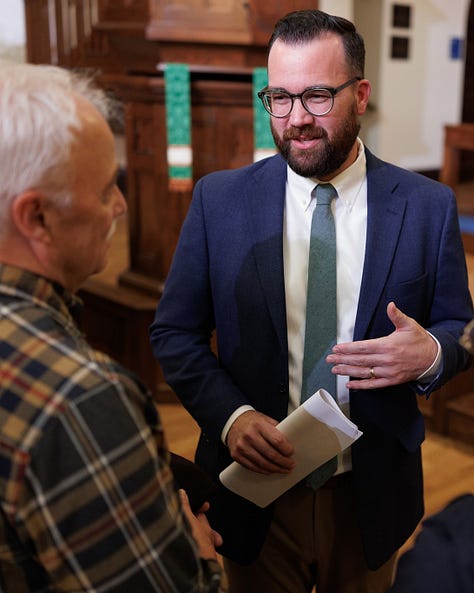
To reach these conclusions, the bishops of Nicaea assumed certain metaphysical precommitments. Metaphysics is the study of being, or what we might call being qua being. What then does metaphysics have to do with God when God is no mere being among other beings? To quote Michael Gorman, “Metaphysics cares about God not because he’s part of the subject matter, but because he’s the source of the subject matter.”[xviii] The major question of Nicaea is where to locate the Son. Is he, with the Father, the source of all being in this world, or is he a being among other beings in this world? Arianism subordinated the Son by reducing him to an effect, a mere product of the Father’s will, which meant he could not be creation’s First Cause with the Father and the Spirit. The Fathers countered: with the Father and the Spirit, the Son is the source of all being (the source of all being qua being).
Today we find ourselves living in an age that the council of Nicaea could not have imagined. Nicaea’s challenge came from within, but we now face a challenge from without. The outlook of so many in our age is one of materialism, as if material properties is the sum of existence. Mechanism is not far behind, as if this world can be explained (and reduced) to mechanical causes. Nominalism is inevitable, as if all we are left with are particulars to which we apply names, particulars stripped of their universals. Without universals to explain what the many things in our world have in common, should we be surprised relativism follows, as if man is the measure of all things, severed as he is from participating in a divine reality to which he is accountable? And if relativism, why not skepticism? Why not doubt the acquisition of truth, and with it, knowledge itself?[xix]
This all might sound quite technical, but I assure you it could not be more practical. On her first day of school this year, my teenage daughter sat down in class only for the teacher to ask her what she had decided her pronouns would be that year. With all eyes on her, my daughter came face to face with a metaphysical question that would apparently decide her identity. Thankfully, my daughter used common sense (which is another way to describe metaphysical reasoning). To ask her what she decided her pronouns would be that year was to ask her to be the Creator. Using reason, she was right to sense something idolatrous in the question itself. My daughter, as you know well, is not unique. The secular world she encountered is one you live in every day. And not only you but the people of your parish.
So, what are we to do?
Nicaea had the luxury of presupposing First Principles. However, today we do not enjoy such a luxury. Nicaea’s metaphysical precommitments must now be walked out on the red carpet.
Nicaea had the luxury of presupposing First Principles. Heretics and orthodox alike agreed on reality; where to position the Son in that reality was the point of controversy. However, today we do not enjoy such a luxury. Nicaea’s metaphysical precommitments must now be walked out on the red carpet.
Previous centuries operated in the first half of Acts 17, where Paul and Silas encountered Jews in the synagogue at Berea. Paul and Silas did not have to explain whether God is a cause or an effect, whether God is pure spirit or whether he is a composition of form and matter, whether he is his existence or depends on another to receive it, whether God is perfect in the fullness of his everlasting life or whether he must become something more to actualize his potential, and so on. No, the Bereans more or less understood the reality in which they lived; what they were missing was simply Jesus. So, they went back to the law and the prophets to find him.
We do not live in that world any longer. The world in which we live is the second half of Acts 17, where Paul enters Athens and addresses its philosophers in the Areopagus. Paul never mentions the name of Jesus, but he begins with their common ground, namely, the unknown God on which they all depend to live and move and have their being. By starting with participation, Paul can then correct their misstep: they have thought of divinity as something that must participate in our gifts for its fullness. However, the Creator is no needy deity, but he is a se, the fullness of eternal life in and of himself. He is no being among beings but the source of all being, the one in whom we owe our being. In reality, only a Creator who is the source of all being can give us new life by raising a man from the dead.
We may be after Nicaea in time, but our world is that of Mars Hill. Until we establish the right metaphysic, laying the brickwork with those First Truths or First Principles, we will not have a road on which we can travel with the skeptic and explain what kind of Creator makes an empty tomb feasible to begin with.
What a well we can draw from as Anglicanism. In the twentieth century, E.L. Mascall wrote books like He Who Is; The Importance of Being Human; The Christian Universe; The Secularization of Christianity; and more. On a more popular level C.S. Lewis wrote books like The Abolition of Man; Miracles; and Mere Christianity. Jason Baxter points out that C.S. Lewis saw our day coming. Here is Lewis in the classroom and he is encountering students who more and more have bought into the modern narrative of a disenchanted world, that is, a world in which the supernatural presence of God is absent, even irrelevant. Remember, Lewis himself was once an atheist, but thanks to friends like Tolkien, he discovered that all the myths he cherished in classic literature were but shadowy truths participating in the Grand Myth, the Myth made Fact. Now a Christian in the Church of England, Lewis became a rare jewel in the ruff, a medieval mind in a modern classroom, persuading students that reality is not merely matter and mechanics. His greatest metaphysical work was The Chronicles of Narnia because here the reader encountered a metaphysic of wonder, one in which every snowflake in this enchanted world participated in the magic of Aslan.
C.S. Lewis does not begin Mere Christianity with Nicaea but, recognizing he is standing in a modern Areopagus, he starts with natural theology.
Lewis is clear that his intention in Mere Christianity is not to argue for this or that tradition. Still, I am convinced it takes an Anglican, and one like Lewis, to write this masterpiece. Have you ever noticed that Nicaea makes a grand appearing. Right in the middle of the book Lewis spends two chapters introducing the mystery of the Son’s eternal generation from the Father. But what we often forget is how he starts the book. Lewis does not begin with Nicaea but, recognizing he is standing in a modern Areopagus, he starts with natural theology, specifically natural law. Lewis could only arrive at that grand mystery of the holy Trinity by setting the stage with certain First Truths so that his modern readers could clearly perceive the power and presence of the Almighty.
Anglicans love to share how they are on mission, but we must understand that without First Principles, those First Truths on which Nicaea depends, Anglicanism will not be prepared to demonstrate to our secular age why Father, Son, and Holy Spirit are the source of reality.

I began this lecture with those hard words I heard from my wife. “I am weary. I’m tired of thinking about myself. I just want God.” If you feel the same way, may these comforting words, on the eve of All Saints’ Day, realign your passions to that reality which bridges heaven and earth:
“Almighty God, you have knit together your elect in one communion and fellowship in the mystical Body of your Son: Give us grace so to follow your blessed saints in all virtuous and godly living, that we may come to those ineffable joys that you have prepared for those who truly love you; through Jesus Christ our Lord, who with you and the Holy Spirit lives and reigns, one God, in glory everlasting.”
Glory be to the Father, and to the Son, and to the Holy Spirit; as it was in the beginning, is now, and ever shall be, world without end. Amen.
Endnotes
[i] Basil, Letter LXXXII.
[ii] Moreover, when a candidate comes before the bishop for confirmation, the bishop says to the whole church, “Dearly beloved, it is essential that those who wish to be Confirmed or Received in this Church publicly … know and affirm the Nicene Creed” (BCP [2019], 176). As to article 8, it was originally article 7 in the Forty-two articles.
[iii] You can also imagine my exuberance at the fact that it is not only Nicaea, but the Athanasian Creed that is affirmed.
[iv] BCP (2019), 489.
[v] “The Form and Manner of Ordaining and Consecrating a Bishop,” in BCP (2029), 498.
[vi] Irenaeus, Against Heresies III.2.
[vii] Irenaeus, Against Heresies III.2.
[viii] Irenaeus, Against Heresies III.3.
[ix] Irenaeus, Against Heresies III.3.
[x] On this point, consult Hooker. One must not limit himself to the first four books of Hooker’s Ecclesiastical Laws but consider the whole of his work: The Folger Library Edition of The Works of Richard Hooker, Volumes I and II: Of the Laws of Ecclesiastical Polity, ed. Georges Edelen and W. Speed Hill (Harvard University Press, 1977).
[xi] Article XXV.
[xii] BCP (2019), 168.
[xiii] Or as the priest says when he touches the water, “Now, Father, sanctify this water by the power of your Holy Spirit. May all who are baptized here be cleansed from sin, be born again, and continue for ever faithful in the risen life of Jesus Christ our Savior.”
[xiv] Article XXVII.
[xv] Notice, these words come just after baptism.
[xvi] These words come just before baptism.
[xvii] Hooker, Ecclesiastical Laws (Davenant, 2019), 115.
[xviii] Michael Gorman, A Contemporary Introduction to Thomistic Metaphysics (Catholic University of America, 2024), 187.
[xix] See my book, The Reformation as Renewal (Zondervan Academic, 2023), 227, where I draw on Lloyd-Gerson’s work, From Plato to Platonism.
Matthew Barrett
Advertisment
