

Classical Education as Freedom from Modern Malaise
Perhaps the intended solutions are causing the problems.
When it comes to educational models opinions are far from monolithic, as some of us might extol popular educational methods while others have grown disillusioned with the current system. Indeed, instead of working for change, some skeptics have grown so tired that they would rather tear schools down than build them. Not all parents, students, and teachers feel this pessimism, of course, but even those of us involved with academia to various degrees must ask ourselves difficult questions. It seems fair to think about our current anthropological state in light of our most popular educational models. As modern man seemingly moves away from true humanity, marching either toward mechanization or animalism, we must at least ask if our current educational efforts are setting us out on this anthropological decline in the first place.
Furthermore, perhaps we need not choose between carrying on our current path or destroying the successful roads we’ve built along the way. We acknowledge that a problem exists, but we can easily convince ourselves that the solution is a new educational movement rather than an old one. As we are prone to do, we look forward instead of back. Yet, as Lewis taught us, “A sum can be put right: but only by going back till you find the error and working it afresh from that point, never by simply going on.” Instead of moving forward, it is high time we walked backwards and corrected our accounting error. It’s time we consider the possibility that the modern educational format might not only be incapable of curing our modern malaise but a chief contributor to it. The medicine might be making us sick.
There are a diversity of educational methods, models, and maneuvers, so I want to avoid painting with too broad of a brush (although I hope that my readers will grant me grace when I fail). The contemporary educational models which I would like to warn against are those which separate “fact” from ethics and discount non-materialistic questions. These secular models are limited by the scope of modern materialism and leave questions regarding spirituality and ultimate meaning to the students’ preferences. Only that which can be weighed, measured, and replicated is taught with confidence, while all metaphysical claims are seen as remnants of a bygone era – best ignored if not belittled. Classical education, on the other hand, holds an unwavering eye on human virtue, the transcendentals, and that which is ultimately real. There are, of course, excellent teachers and administrators within non-classical schools that are still directing their students to the good, the true, and the beautiful, and for that they should be commended. Some of these exemplary educators, however, are operating within a system opposed to their efforts – they are small safe-houses of reality hidden throughout an imaginary world. State-sponsored public schools simply do not, indeed cannot, convey the world as it is without facing significant risk. The world depicted by contemporary secular education is one only designed for machines and beasts, so it is no wonder humans do not feel at home within its borders. Classical education aims to draw in color, exposing students to the material structure of reality while also supplying the value embedded in the cosmos – the good, the true, and the beautiful. Share on X
Part of the theological retrieval movement’s merit stems from the need of seeing our modern circumstances with clear eyes. We must identify those assumptions we hold that would have been foreign to the vast majority of Christians throughout the Church’s history. If we never take time to rediscover the great works of the past, then we risk straying off the path blazed before us, either walking into the wilderness or needlessly retracing old steps. The need for heeding the words of the past, however, is not limited to theological endeavors. The popular narrative may make it seem that we have outgrown our ancient friends, as if our modern understanding of the world negates any benefit that could theoretically be gained from looking backwards. Our old friend Lewis, a man out of time in some respects, can again be helpful: “It is a good rule after reading a new book, never to allow yourself another new one till you have read an old one in between.” A holistic education will necessarily take account of all truth, both modern and ancient, but the existence of one does not negate the other. 21st century science separated from the seven liberal arts or the classical virtues is incomplete and ultimately devastating. Reading old books need not require ignorance of new books but will, instead, provide us with a framework for interpreting the new. As Socrates said in Plato’s Republic, “I enjoy talking with the very old, for we should ask them, as we might ask those who have travelled a road that we too will probably have to follow, what kind of road it is, whether rough and difficult or smooth and easy.”
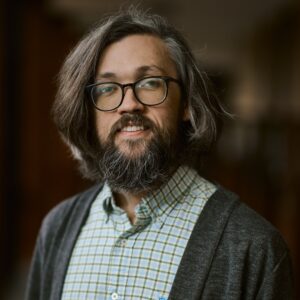
Timothy Gatewood
Timothy Gatewood is an adjunct professor for Midwestern Baptist Theological Seminary where he teaches courses in theology, philosophy, history, and Christian political thought. He serves as the executive editor of Credo Magazine and the associate director of the Center for Classical Theology. Timothy is the author of Truth Not Served By Human Hands (Christian Focus, forthcoming), and his work has been featured in The Lost Sermons of C.H. Spurgeon, the Midwestern Journal of Theology, Didaktikos Journal, and before the Evangelical Theological Society.
Advertisment
