

The Credo Magazine Book Awards move past general categories in Christianity at large to give attention and praise to the best works in theology today. But not just any theology will do. In the spirit of Credo itself, these accolades go to those authors who model and advance the retrieval of classical Christianity for the sake of renewal today, and not only renewal in the academy but in the church.
The Judges for 2025
Each year a new set of judges are chosen, judges who are theologians themselves, experts in their field, practitioners of theology in the church and academy, and some even Credo Fellows. This year’s judges include:
 Shawn Wilhite is Associate Professor of New Testament, California Baptist University. He has published books on Patrick of Ireland and the Didache.
- Anthony Dupont is Research Professor at Leuven University. He is the author of several books, including Preacher of Grace: A Critical Reappraisal of Augustine’s Doctrine of Grace in His Sermones Ad Populum on Liturgical Feasts and During the Donatist Controversy and Gratia in Augustines Sermones ad Populum during the Pelagian Controversy.
- Sean Luke is Director of Anglican Aesthetics and graduate of Trinity Evangelical Divinity School.
- Craig Carter is a Research Professor at Tyndale University. He is author of several books, including Interpreting Scripture with the Great Tradition: Recovering the Genius of Premodern Exegesis and Contemplating God with the Great Tradition: Recovering Trinitarian Classical Theism.
- Scott Meadows is an Editor for Credo Magazine, holds an MDiv from Midwestern Baptist Theological Seminary, and is a member at St. Aidan’s Anglican Church.
- Matthew Barrett is also a Research Professor Theology at Trinity Anglican Seminary. He is also the McDonald Agape Visiting Scholar at the Dominican House of Studies and Thomistic Institute. He is the author of several award winning books, including Simply Trinity and On Classical Trinitarianism. He is currently writing a Systematic Theology with Baker Academic. He is the founder of Credo.
After consulting each publishing house’s books in 2025 and narrowing the many good books out there down to finalists, we now have your winners! Below you will find out why these books were chosen.

Theology for the Christian Life
Paul Kingsnorth.
Paul Kingsnorth’s Against the Machine is a prophetic and essential read for Christian life in the dawn of the AI era. Kingsnorth writes in a distinctive style of what I call a “sacramental Luddite,” blending the poetics of Orthodox storytelling with a Wendell Berry–inspired rejection of unchecked technology and culture. He dissects the spirit of the “Western Machine,” connecting technological progress to our entertainment-saturated culture, and urges classical Christians to retrieve ancient visions of human flourishing. The book’s opening chapter—a beautiful articulation of humanity’s spiritual history—is worth the price alone. Overall, Against the Machine stands as one of the sharpest anti-mechanistic critiques of technological modernity available today, marred only slightly by the author’s occasional swipes at St. Augustine and St. Thomas Aquinas.

Thomas Aquinas
Cajetan Cuddy, O.P. The Summa Illuminated: A Guide to St. Thomas Aquinas’ Masterpiece. Ave Maria Press.
The Summa Theologiae of Thomas Aquinas is one of the greatest works of theology Christianity has ever known. As Thomas puts forward a metaphysic that can explain reality, his work has proved timeless. Unfortunately, many students of theology today are unfamiliar with the Summa and those who do read it often feel overwhelmed because they are unfamiliar with its grammar. Thankfully, Cajetan Cuddy, O.P. has written the ideal introduction, guiding the reader through the Summa so that the novice can understand why this work of theology has proved so enduring. Cuddy’s book is such an accomplishment because it is also a bridge, transferring the perennial First Principles of Aquinas into the land of the twenty-first century. As another generation looks back and asks how Thomism survived our modern day, many will thank theologians like Cuddy for shedding light on the Summa, light that expels the darkness of our postmodern malaise.

Imagination, Beauty, and Liturgy
Greg Peters. Anglican Spirituality: An Introduction. Cascade Books.
Anglican spirituality is the harmony of the ancient Catholic tradition and the Reformational celebration of the Word of God. Rev. Dr. Greg Peters shows us how patristic patrimony and a Scripturally constituted Catholicism is baked into the contours of the Book of Common Prayer. Blending scholarly precision with pastoral accessibility, Fr. Greg shows that the Office forms a Benedictine habitus of love, the Eucharist gives us the unitive and deifying flesh of Christ, the Scriptures train our imaginations in the Word, and the Holy God binds us together as the Church in order to send us out as the sacrament of the risen Christ in the world. This is perhaps the best contemporary introduction to Anglicanism I’ve read.

Systematic Theology & Dogmatics
Paul Gavrilyuk, Andrew Hofer, O.P., and Matthew Levering, eds. The Oxford Handbook of Deification. Oxford University Press.
Deification is one of the most important and difficult doctrines of Christian theology. How fitting, then, that Gavrilyuk, Hofer, and Levering has assembled some of today’s most impressive historians, theologians, and philosophers, and from a variety of Christian traditions, to provide further clarity on deification. This Oxford handbook is special though, both for its impressive survey of the Great Tradition (patristic, medieval, and modern) and its expansive section in dogmatics. The reader leaves this tome convinced deification is not merely a matter of eschatology but informs each of the loci of the Christian faith in a way we cannot afford to neglect.

Patristic, Medieval, or Reformation Theology
Andrew Chronister.
Andrew Chronister brings clarity to a notoriously complex field. Through precise historical reconstruction, a careful reading of primary sources, and a nuanced awareness of rhetorical strategy, Dr. Chronister has helped sharpen our comprehension of Augustine’s theological reasoning during the Pelagian dispute. His work consistently shows how the controversy cannot be reduced to a clash of doctrines alone but must be viewed in relation to questions of ecclesial unity, pastoral responsibility, and the integrity of theological testimony. Moreover, by re-evaluating the charges against Pelagius, reassessing the reliability of contemporary sources, and analyzing the dynamics of Augustinian polemics, he has contributed significantly to correcting inherited assumptions. Dr. Chronister draws renewed attention to the multivocal nature of the sources and encourage a more balanced historiographical approach. In doing so, he not only advances the study of Pelagianism but also offers methodological tools useful for understanding theological disputes more generally: the interplay between polemic and pedagogy, the rhetorical shaping of controversy, and the theological stakes of doctrinal precision. By reframing Augustine’s anti-Pelagian engagement in this broader light, he has offered an interpretative key that is already proving fruitful in contemporary scholarship. In sum, Dr. Chronister’s work provides both fresh insight and methodological depth to the study of Augustine, Pelagius, and late antique theology. It is scholarship that strengthens the field and deepens our conceptual theological frameworks.

Natural Theology
Louis Markos. From Aristotle to Christ: How Aristotelian Thought Clarified the Christian Faith. IVP Academic.
We live in a difficult era, caught as we are between two extremes. On the one hand, radicals will tell us that if we listen to Aristotle, we will corrupt Christianity. On the other hand, modernism will tell us that we must dispense with Aristotle for the sake of revisioning classical Christianity. Against the radicals, we would do well to remember that our Protestant scholastic forefathers, many of whom were responsible for our Protestant confessions, critically appropriated Aristotle to further fortify the pillars of theology. Against modernism, Aristotle could not be more relevant, assisting us with the tools required to keep at bay everything from monism to materialism. The beauty of Louis Markos’s book is the way he introduces the novice to the wisdom of Aristotle to better equip Christianity with a defense of its foundational commitments. In a secular age prone to skepticism, what student can afford not to read Markos and consider the myriad ways Aristotle can clarify what we believe and why?

Translated Work – Patristic
Translated by Matthew R. Crawford and Aaron P. Johnson. Cyril of Alexandria: Against Julian, Introduction and Translation. Cambridge University Press.
The Roman emperor Julian (sometimes referred to as Julian the Apostate) detailed his reasons for leaving the Christian faith in his non-extant work, Against the Galileans (written c. 361–362). Cyril of Alexandrian’s Against Julian wrote a lengthy intellectual response (10 books) some sixty plus years later. Julian’s work may well in fact be “the most sophisticated critique of Christianity” in antiquity. Matthew R. Crawford and Aaron P. Johnson, along with Edward Jeremiah have provided the first English translation of Cyril of Alexandria’s erudite response, which drew from poetry, philosophy, Christian theology, and more. Because Against the Galileans was destroyed in the fourth century, Cyril’s work somehow preserved several fragments of the work. This translation offers insights into pagan-Christian dialogue, Christian intellectual tradition, trinitarian theology, and much much more. Crawford and Johnson offer a 64 page introduction and a translation of over 500 pages. This translation will serve as a definitive English translation for decades to come.

Translated Work — Medieval or Reformation
Translated and edited by Rodney Petersen and Gerald Bray. Revelation. In the Reformation Commentary on Scripture series. IVP Academic.
The book of Revelation has proven to be one of the most difficult and significant books of the Bible, but contemporary commentators do not always give attention to the long history of Reformation interpretation on the apocalypse of John. Gerald Bray and Rodney Peterson have done the world of hermeneutics a great favor by consolidating many of the best commentaries on Revelation by the Reformers into one volume. Not only does this volume give us insight into the 16th century understanding of history and eschatology, but this volume will help Protestants today ask in what ways their eschatology is or is not not in the stream of their Protestant forebears.

Theological Retrieval
Edited by Andrew Hofer, O.P. The Cambridge Companion to Augustine’s Sermons. Cambridge University Press.
Augustine receives attention for many reasons: theologian, philosopher, apologists, and more. But what about as preacher? Augustine’s sermons are some of the most insightful windows we have into the world of scripture. Moreover, Augustine sets an example of what preaching can and even should look like, especially to moderns who are not used to hearing homilies that read and preach scripture theologically. Andrew Hofer, O.P. has assembled a talented team of Augustin scholars to help Christians understand why Augustine’s sermons are a legacy that must be carried on. Readers will be especially interested to learn that the chapters not only explore doctrinal topics but trace Augustine’s homilies around the liturgical calendar. Here is a fine example of what theological retrieval can look like today.

Book of the Year
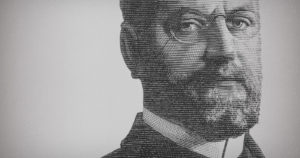
Gallus Manser, The Essence of Thomism. Translated by Michael Miller. Emmaus Academic Publishing.
Credo Editors
This article is brought to you by the Credo Editors
Credo Magazine

Advertisment
