
Every once in a while, you read a book that gets to the heart of an issue and clarifies what was opaque by  making some crucial distinctions.[1] Steven Long’s book, Natura Pura: On the Recovery of Nature in the Doctrine of Grace (Fordham University Press, 2010) is that sort of book. It makes clear what the controversy over “pure nature” that was so widespread in twentieth century Roman Catholic theology was all about. Here is a quick summary of the controversy.
On Aug. 4, 1879, Pope Leo XIII issued an encyclical, Aeterni Patris, which officially endorsed Thomism within the Roman Catholic Church and called for a revival of Thomistic teaching in seminaries and universities around the world. To a Protestant this seems rather straightforward. Faithful Roman Catholics will naturally obey the Pope and rally around Thomism as an alternative to the liberal Protestant capitulation to the Enlightenment and the revision of Christian doctrine to conform to the strictures of the post-Kantian rejection of metaphysics. Henceforth, the Roman Church will stand firm against modernism and take shelter under the wings of the perennial philosophy and creedal orthodoxy.
But the twentieth century didn’t work out that way. By the last decade of the nineteenth century the Roman Church was embroiled in the Modernist Crisis with many of its theologians mimicking liberal Protestants in embracing the nominalism, mechanism, and naturalism of the Enlightenment and trying to reconcile Christianity with Kantianism. By the 1920’s figures such as Teilhard de Chardin were trying to reconceive Christianity within a Darwinian framework, despite the fact that the Magisterium had firmly rejected the naturalism of both Hegelianism and Darwinism. Many Roman Catholic intellectuals, including philosophers as well as scientists and other university professors, feared being tainted by holding the same positions as Protestant Fundamentalists and felt that they were losing the culture to the mainline Protestants. In the midst of this cultural situation in both Europe and North America, there was a high degree of interest in finding a non-Fundamentalist way of avoiding the extremes of rationalism and anti-supernaturalism.
Several major strategies were followed. One was engagement with Karl Barth, who was perceived, as Bruce McCormack would later put it, as being both “orthodox” and “modern.” Neo-orthodoxy appeared more promising than Bultmannian scientism or Schleiermacherian pantheism. Hans Urs von Balthasar’s The Theology of Karl Barth encouraged Roman Catholics to consider ecumenical engagement as a way of breaking out of what began to be called “Neo-Thomism” or “Neo-Scholasticism.” These terms were applied to those who took Aeterni Patris too seriously as if they actually thought that one could roll back the clock and bring 13th century scholastic thought into the modern situation. Many were willing to admit that the project of revising Christian doctrines to fit into the post-Kantian and post-metaphysical situation was also impossible, but they were looking for a compromise, a Third Way.
In this context, another strategy was pursued in the rise of the Ressourcement Movement accompanied by the Nouvelle Théologie. Key figures were Henri de Lubac and Jean Danielou. They went back to the patristic sources of Christianity to renew theology today as an alternative to what they considered to be the ineffectual imposition of rigid scholastic categories on a modern world that had become inalterably aware of history and committed to an evolutionary and pragmatic concept of truth. However, we must stress that their goal was not to capitulate to modernity, but to speak to it. They were keenly aware of the dangers of atheism, relativism, and materialism and wanted to restate Christian doctrine so as to win a hearing for the Church in a new and unprecedented cultural situation. Doing philosophy as if the thirteenth century had never ended seemed to them to be a recipe for losing the battle for cultural influence by default.
A central idea in the Nouvelle Théologie. was Henri de Lubac’s rejection of “pure nature.” By this he meant the rejection of a concept of nature that excludes the supernatural from determining its meaning. Whereas Neo-Thomism interpreted Thomas as teaching that human nature is defined by our ability to know and live in light of the natural end of the human creature, de Lubac argued that this was a misinterpretation of Thomas introduced by commentators on Thomas since the Renaissance. For de Lubac, the true interpretation of Thomas is that he never intended to define man by reference to “man’s natural and proximate end as distinct from the supernatural beatific end.” (Long, 11) Long argues convincingly, however, that the Neo-Thomists were correct in interpreting Thomas as teaching that human beings can be defined as having both a natural telos, by which the human species is defined over against animals and angels, and also as having a supernatural telos, bestowed by God as an act of grace, which terminates in the beatific vision. Long says that human nature is reduced by de Lubac (and von Balthasar) to a “limit concept bereft of significant ontological density and intelligibility in its own right.” (Long, 53)
Long does not impugn de Lubac’s motives; he acknowledges that de Lubac wanted to offer an alternative to the Enlightenment’s tendency to make nature unintelligible and human nature unknowable. What is at stake is the possibility of knowing natural law and any possible basis for an objective moral order.What is at stake is the possibility of knowing natural law and any possible basis for an objective moral order. Share on X Although de Lubac believed that the best way to counter the naturalism of nineteenth century atheism was to stress the supernatural telos of man, Long argues that he unwittingly surrendered on the main point of the inherent intelligibility of nature and what Long terms “natural order as a theonomic principle.” (Long, 43) De Lubac relied on a supernatural teleology to determine human nature but the problem is that once we accept the Kantian banishment of God from the natural world of human agency the telos of the human being becomes a matter of revelation and religious faith rather than rational knowledge. As secularism has advanced in Western culture, all public institutions have come to assume that traditional morality cannot be justified by reason and therefore we cannot allow morality to be imposed on non-religious people. In the later part of the book, Long analyzes the difficulties inherent in promoting any sort of binding, objectively known theory of human rights or natural law in a post-Kantian culture. In short, he argues that de Lubac’s gambit has failed to provide the Church with a philosophical tool adequate for the times.
The dispute is extremely complicated, but the virtue of Long’s book is that it untangles the threads expertly and clarifies the exact nature of the arguments. Long’s main criticism of de Lubac (and Étienne Gilson) is that “a unilateral stress upon certain aspects of St. Thomas’s teaching about the natural desire for God led de Lubac to deny the existence of a proportionate natural end as opposed to the supernatural finisultimus.” (Long, 11-12) It is important to stress that at the heart of Long’s thesis is the proposition that de Lubac’s interpretation of Thomas is wrong, not just lacking in usefulness. Long is not arguing on pragmatic grounds, as if we should reject de Lubac’s concept of pure nature because it fails to ground a proper understanding of human nature and natural law. Rather, he is arguing that it fails in these ways because it is a false theory and one that was never held by Thomas himself. Therefore, the way forward is back to Thomas himself and the recovery of a distinction between nature and grace that does not destroy nature or turn it into mere raw material for the human will.The way forward is back to Thomas himself and the recovery of a distinction between nature and grace that does not destroy nature or turn it into mere raw material for the human will. Share on X Viewed in that light, the doctrine of Thomas could not be more relevant to our situation today.
This might seem like a rarified theological dispute completely detached from practical life, but as Thomas quoting Aristotle points out, a small error in direction at the beginning of a journey can lead to a significant difference in destination. Thomas offers an understanding of human nature that sees man as having both a natural telos that defines him as a rational animal and also as having received by grace a supernatural telos that allows for the beatific vision. Grace does not destroy nature but perfects it. Long’s thesis buttresses the essentially anti-Gnostic idea that there exists naturally something that is essentially good that also is perfected by grace. This doctrine is desperately needed today by a society ravaged by an anti-humanistic Gnostic cult that views the body as a tool at best and as an enemy to be conquered at worst by the autonomous self of modernity. For that reason, Long’s book is of great importance to anyone who wishes to recover and promote the existence and relevance of natural law as participation in Divine eternal law today.
Image Credit: Tobi Gaulke | Flickr
[1] I wish to thank Rev. Cajetan Cuddy, O.P. for his helpful comments on a draft of this essay.
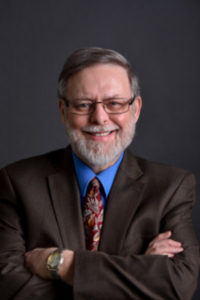
Craig A. Carter
Craig A. Carter is the author of Interpreting Scripture with the Great Tradition: Recovering the Genius of Premodern Exegesis (Baker Academic, 2018) and Contemplating God with the Great Tradition: Recovering Trinitarian Classical Theism (Baker Academic, 2021). He is currently writing a third volume in the Great Tradition trilogy on the recovery of Nicene metaphysics. Other upcoming projects include an introduction to Theology in the Great Tradition and a theological commentary on Isaiah. He serves as Research Professor of Theology at Tyndale University in Toronto and as Theologian in Residence at Westney Heights Baptist Church. His personal website is craigcarter.ca and you can follow him on Twitter.
Credo Magazine

Advertisment
