
Contemplation, Participation, and a Pinch of Optimism
December is a unique time of the year, allowing me to reflect on where my research has been and where it’s going. Looking back over the last several months, there are several ways research for my forthcoming Systematic Theology (Baker Academic) has developed:
Theology as Contemplation
First, theology as contemplation. 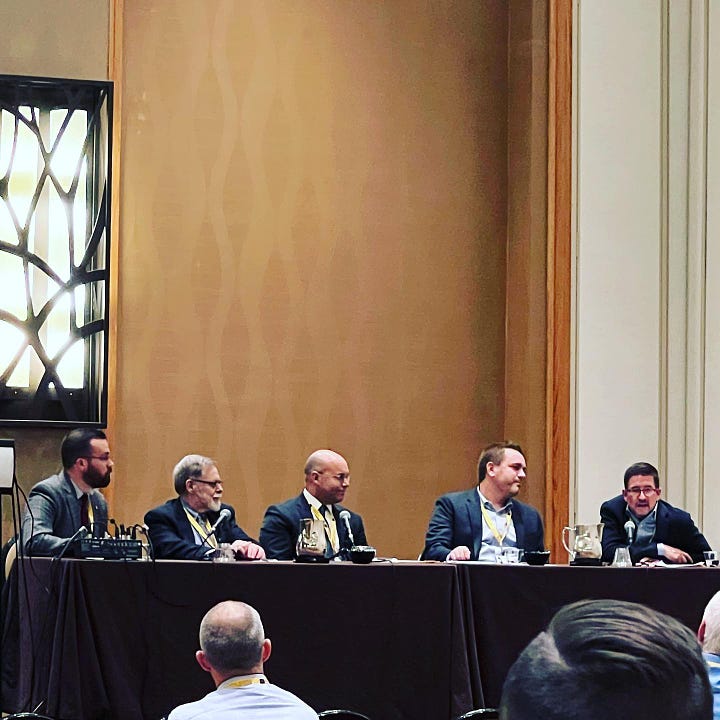
Classical Realism
Second, classical realism. Since my last update I also taught the new P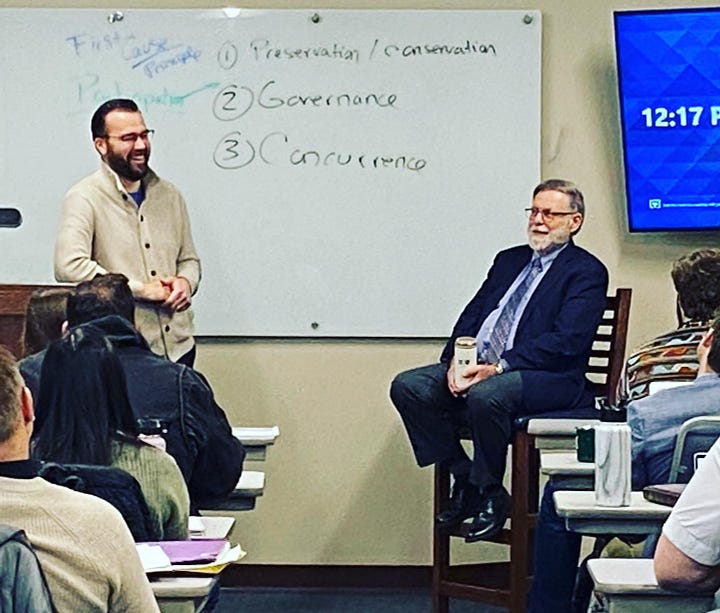
Classical Theism and Systematics

Third, classical theism and systematics. I finished recording lectures at the For the Church Institute here at MBTS. By its conclusion I left with one heavy impression: classical theism really does affect everything. I noticed how classical theism defines, for example, anthropology (think hylomorphism for instance) in a way that is so radically antithetical to modern and postmodern approaches to anthropology. So many of the debates over ethical issues in the culture (abortion, transgender, etc.) are but symptoms of our metaphysic. What a win it would be if we could move beyond just slapping a Bible passage on these debates to a robust, intellectual, even metaphysical argument about what it means to be human, especially in a culture that no longer believes in the authority of the Bible.
Fourth, accessibility. I met with my editor at Baker Academic and we explored tangible ways to make my Systematic Theology accessible to the student. If you have ideas, please send them my way. I won’t share all the secrets now, but I plan to at least conclude each chapter with key primary sources that will help the student know what to read next (a question I receive most of all). I also have other ideas on how to incorporate the scholastic method into the student’s engagement with the text itself (which should, I hope, be a clarifying and fascinating exercise for students).
Other updates that continue to push my systematic down the line:
- I am now waiting on the proof for my forthcoming Zondervan book, The Reformation as Renewal: Retrieving the One, Holy, Catholic, and Apostolic Church.
- I have engaged several theologians on the Credo podcast this Fall, including Glenn Butner on the trinity, Steven Duby on impassibility, and Stephen Nichols on R. C. Sproul and Classical Theism.
- The Journal of Classical Theology just released my new essay, “Classical Theology: A Spiritual Exercise.” Gazing at the beauty of the Lord is the premier ambition of the theologian, but the theologian’s task is incomplete if his heavenly gaze is for himself alone. Also, do read the other essays by outstanding theologians I have the privilege of knowing, including Midwestern Baptist Theological Seminary alumni like Ronni Kurtz and Samuel Parkison (full pdf).
- The new issue of Credo Magazine is on the Beatific Vision and was recently released.
- I preached in chapel at MBTS on the impassibility of God. Yes, it can be done…from the text of scripture. I chose 1 Samuel 15 (a hard text, no doubt) for my passage.
10 Reasons for Encouragement and Optimism
I conclude with a pinch of optimism: I left ETS encouraged about the advancement of classical theology. Here are reasons why: humility, growth, strategy, unity, clarity, continuity, compatibility, renewal, hope, and charity. Here are all 10…
1. Humility. I am seeing more humility than hubris. So many shared their story: classical theology changed their teaching, preaching, publishing, and love for God. Most of all, the stories of seasoned scholars were inspiring, exhibiting their humility to change course rather than doubling down.
2. Growth. Classical theology is influencing other disciplines in rich ways, not just systematics but biblical studies, philosophy, ethics, apologetics, etc. I saw a variety of scholars all using their disciplines to advance our understanding and commitment.
3. Strategy. Authentic cooperation is happening, so that theologians from various traditions are talking to each other as they consider how classical theology might help their institutions and churches remain faithful.
4. Unity. Classical theology will certainty divide, separating advocates from those hostile or those who merely want to modify. But classical theology also has the power to unite. Genuine friendships are forming as scholars and pastors, young and old consider how they can help one another.
5. Clarity. I didn’t anticipate (but should have) hearing philosophers disenchanted with some forms of analytic theology which, in the name of retrieval, either jettison or revise core doctrines (simplicity, Trinity, etc.) to retain modern metaphysical commitments. I was surprised by how many seasoned scholars spoke from personal experience to warn younger scholars against the revisionism of modern metaphysics.
6. Continuity. I did not encounter anyone claiming there is no diversity in the tradition (a stereotype). Rather, I saw scholars recognizing diversity but in more minor ways or with secondary loci, all the while fortifying a core continuity in primary loci that justifies a broad appeal to a Great Tradition. Variety doesn’t preclude stability.
7. Compatibility. I saw young and old scholars invigorated by ressourcement of Reformed Scholastics. Scholars are surfacing ways RS retrieved classical theism to answer unique challenges. Scholars are now considering how we can do the same but to answer new challenges today.
8. Renewal. I see a genuine desire to avoid caricatures of retrieval. Rather than a mere excavation, those committed to classical theology desire to retrieve the tradition but for the sake of renewal in the aftermath of (post)modernity.
9. Hope. I think classical theology has a long way to go. It’s still an uphill climb. We can take nothing for granted. Many new books are oppositional. And yet, more publishers realize this is not a fad but a revival of historic Christianity. How encouraging to see books releasing.
10. Charity. Given the uphill climb, many lamented how intentional divisiveness within the camp feels self-defeating. While there are times for refinement, without linking arms the majority report of the last half century will continue. We will self-destruct. For the sake of orthodoxy, I sensed a genuine charity, lest classical theology be but a splash in the ocean.
I’m Matthew Barrett. Until next time, do explore Credo Magazine, and get to know other theologians on the Credo Podcast. I hope to see you at the annual lecture for the Center of Classical Theology in 2023. Registration is open!
This article was first published at Anselm House, Matthew Barrett’s regular newsletter about his Systematic Theology. Subscribe here.
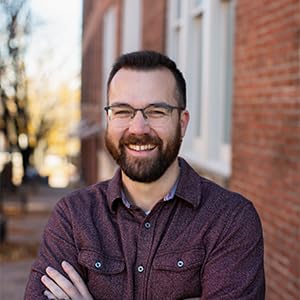
Matthew Barrett
Advertisment
