But I in my uprightness will see your face,
And when I awake I shall be filled with the vision of you
Psalm 17:15, NJB
The American evangelicalism of my youth offered one great promise: how to go to heaven when you die. In sermons and studies, ‘heaven’ was articulated as another place one goes to, while the present world is scheduled to expire sometime in the future due to a sequence of apocalyptic events. One can imagine then, the sparks that flew when N.T. Wright’s book Surprised By Hope aimed to toss out that whole picture and start over from, what he describes as, Biblical basics informed by a historical critical vision of the worldview of Second Temple Judaism.
I caught the spirit of the new perspective at a conference nearly 20 years ago at Wheaton College, in which Wright, flanked by Duke divines Richard Hayes and Jeremy Begbie, exclaimed, “We are not going to go up there, God’s coming down here.” Wright was correcting the popular concept of “heaven” as a far-off place away from “this old world” which will burn up at the last. “To put it bluntly, creation is to be redeemed; that is, space is to be redeemed, time is to be redeemed, and matter is to be redeemed.” Eager to move on from the old picture of disembodied souls flying up somewhere to crystal mansions in heaven, evangelicals have largely responded positively to Wright’s intervention, such that “The New Heavens and The New Earth” (hereafter TNHTNE) is now a recognizable set phrase in popular studies and sermons, referring to the same extension of the present plane of time and space, only renewed by God’s healing power at the end of the age. Wright inveighs: “The story doesn’t go like this: ‘Jesus died, Jesus was raised, so that’s all right, we get to go to heaven.’ No! Resurrection is about a new bodily life *in* this world and *for* this world.” Is eternal life really *for* the revivification of this world?
The eschatological hope named in the Creeds is not The New Heavens and the New Earth, but rather the Resurrection of the Body. This essay’s contention is that The Resurrection of the Body is not, as it appears in Wright’s Surprised By Hope, merely a component part of God’s overall objective of the renewal of all creation. Rather, it is the main event of Christian eschatology, while the rest of creation plays a supporting role. I intend to make a small contribution here toward restoring The Resurrection of the Body itself to its rightful place as the focus of contemporary Christian hope, and relegate speculations about the renewal of the present spatiotemporal plane to the backdrop of pious opinion.
The Object of the Resurrection
One of the most consistent spiritual yearnings in the Bible, running right through the Old and New Testaments, is for deep and uninhibited intimacy with God himself. The contention of this paper is that this yearning supplies the substance of eschatological hope in general and the objective of the resurrection of the body in particular. Indeed, the earliest hints of what would later become the Jewish hope, and then the Christian doctrine of the Resurrection of the Body, name intimacy with God as its purpose. Job 19:26 provides perhaps the oldest and most widely quoted example: “And after my skin has been thus destroyed, yet in my flesh I shall see God.” The suffering patriarch, ravaged by skin diseases, would have had every reason to, with Socrates, hope for death as an escape from the prison of a corruptible body. And yet, Job’s future hope is the vision of God in his own flesh. Although Job’s cri de coeur is ecstatic, gesturing at a blurry horizon rather than a fully realized picture of bodily resurrection, it contains the all-important statement of a corporeal future beyond death, toward the final end of “seeing” God. In essence, Job expresses not only the hope that he will receive his body back, but also what he wants to do with it.
Job’s hope of “seeing” God recurs throughout the Old Testament. This “seeing” suggests more than simply looking at God like any other object in the world, which is elsewhere cited as either impossible or at least fatal to try. As in the several places where this hope is expressed (Job 33:26; Ps. 11:7; 17:5) to “see” God or “behold his face” suggests a state of intimacy with God and harmony with his purposes. Such is the constant yearning of the Psalms. Intimacy with God is expressed as sight, or the ability to look on God’s face, a yearning linked from the beginning to the earliest glimmers of the hope of bodily resurrection recorded in Job. Share on X Psalm 16 declares that God will “not abandon my soul to Sheol” and declares “pleasures forevermore” available in God’s presence. In Psalm 17:5 (long recognized to be another allusion to resurrection) the “vision” of God’s “form” satisfies the worshipper. The same is meant when the righteous “seek his face” in prayer. Intimacy with God is expressed as sight, or the ability to look on God’s face, a yearning linked from the beginning to the earliest glimmers of the hope of bodily resurrection recorded in Job.
It would take centuries for these seeds of hope beyond death to grow through the prophetic and exilic eras until the Jewish martyrs of the Maccabean revolt in the 160s BC were prepared to receive bodily resurrection as their reward for heroic faith. Throughout the Prophetic literature, the resurrection of the body takes clear shape accompanying God’s cosmic purposes for the nation of Israel and the whole world. But their stupendous visions must be buoyed by the deeply personal insights of the Wisdom books, not only Job but also Ecclesiastes, and even Song of Solomon, whose paean to romantic love seemed to the Church Fathers to reflect divine yearning for intimacy with his special creation. Put another way: even as the vision of what we are saved out of expands, what we are saved for remains: perfect intimacy with God. Even as Ezekiel predicts the general resurrection in the Valley of Dry Bones, it is the indwelling Spirit that gives life to the resurrected bodies. Likewise, the vision of the reunification of Israel around a single king and sanctuary culminates in the fulfillment of the old Levitical promise of divine intimacy with human beings: “My dwelling place shall be with them, and I will be their God, and they shall be my people.”
Even through the cosmic apocalyptic upheavals, the central promise of right relation and intimacy with God remains central to the prophetic literature. Even as the prophetic vision expands to encompass the whole cosmos, the hope of a fuller intimacy with God remains, giving the future historical movements predicted their final cause. God promises to remove every obstacle to the hope of this sort of union with him: distance, political division, enemy threat, the inhospitable natural world and finally death itself. Share on X. Centering this hope of perfect intimacy, we shall risk a coarse summary of eschatological hope. God promises to remove every obstacle to the hope of this sort of union with him: distance (returning the exiles), political division (reunifying Israel), enemy threat (subduing the nations), the inhospitable natural world (a return to an Edenic peace) and finally death itself (resurrection). In essence, God will offer every worthy person the same compensation offered to Job: the gift of God himself.
Christ’s Resurrected Body and Ours
This hope of perfect intimacy, so frequently and anciently expressed in the bodily language of “seeing” God, converges with the Prophets’ preaching of God’s project of national and cosmic restoration through the work of the messiah who comes into focus in the person of Jesus Christ in the New Testament. Christ, God and man, not only promises to begin the restoration of Israel, but also resolves the puzzle of the vision of God posited at the beginning of John’s gospel: “No one has ever seen God; God the only Son, who is at the Father’s side, he has made him known.” For John, intimacy with Christ is intimacy with the Father, for “if you have seen me you have seen the Father.” The same happens with the resurrection itself. Martha, expressing the fully realized hope of general bodily resurrection, receives the answer: “I am the resurrection.” Both bodily resurrection and its aim of intimacy with God, two themes which tack so closely together in the scriptures, come together in the person of Jesus Christ.
It is left for Saint Paul to expound on how Christ’s resurrected body effects the same for individual believers. Paul’s theology gives the doctrine of the Resurrection of the Body its most realistic expression as a bodily state of incorruption capable of enjoying the pure vision of God. In his earliest letter Paul’s summary of the reunion of the resurrected saints with Christ (which, one must admit, occurs “in the clouds” rather than on terra firma) ends with its characteristic purpose of intimacy: “so we will always be with the Lord.” How could mortal beings be made capable of such union? How can human creatures “see” a God who “dwells in unapproachable light, whom no man has seen or can see?” Both bodily resurrection and its aim of intimacy with God, two themes which tack so closely together in the scriptures, come together in the person of Jesus Christ. Share on X
Again, such vision is spiritual, not natural; not light hitting our retinas, but unmediated communion with God who is Spirit. How can this be achieved? As above, Christ himself is the answer. The general resurrection hoped for in Jewish tradition is pioneered by Christ’s resurrection from the dead on Easter. Christ applies his resurrection power to the believer by means of spiritual union with his body, and the result is the mystery that all of the elect will be changed, in order to “bear the image of the man of heaven.” Spiritual bodies, refashioned into Christ’s likeness, make human beings capable of the pure vision of seeing God “face to face.” This change may be completed “in a moment” at the end, but the hidden seed of that change begins its cultivation in the present life by the influence of the Holy Spirit: “And we all, with unveiled face, beholding the glory of the Lord, are being transformed from one degree of glory to the next.”
All of the above is to show how the hope of eternal, spiritual union with God (later expressed in Western doctrine as The Beatific Vision) is not an invasive strain of Middle Platonism alloyed onto a physicalist “Jewish” scheme, but a persistent Biblical yearning that accompanies the very earliest hints of the hope of the resurrection. And yet, this good question still arises: of what use is the body in an essentially spiritual union? Indeed, Stoic as well as the varied gnostic mystery cults all imagined disembodiment as a prerequisite for unity with the non-physical deity. But it is just here that the necessity of the body comes fully into focus as a necessary condition for true spiritual union with God. The body makes sense of the sort of state that Job, the Psalmists, the Prophets, and the Apostles all had in mind: a relation of differentiated identity, united by love. The scriptures nowhere express a yearning for the sublimation of the human person into the divine, nor of the commingling of the “divine” and “humanity” in general, but the one God (YHWH), and his people (at first Israel and then the elect in Christ) eternally united by love. This state of differentiated eternal union is just what the resurrection of the body guarantees: God and the human person as two distinct subjects in relational union, both now and in the age to come.
Hence Paul’s insistence on the “changed” spiritual body. We will not inherit a different body, but rather the same body as ours on earth, transformed, transfigured, and empowered by an incorruptible spiritual nature. For the individual, the body is the referent which vouchsafes personal identification, the unit to be “numbered” among the Saints. To put it another way, the body provides us the “eyes” with which we may “see” God and ensures that it will really be us seeing him.
The Resurrection of the World vs. the Resurrection of the Body
If I take the post-Wright evangelical synthesis of TNHTNE as a combatant here, it is not because I think that it is unfaithful or unfruitful to speculate about the destiny of the present spatiotemporal expanse we presently inhabit. But I do think that it is beside the point of the Resurrection of the Body. In Surprised By Hope, Wright gives his answer to the question of why there is a bodily resurrection. “Why will we be given new bodies? According to the early Christians, the purpose of this new body will be to rule wisely over God’s new world.” The new eschatological synthesis of TNHTNE certainly includes the resurrection of the body, but as a subset of its focus on revivifying the whole of creation. Creation itself, meaning the present spatiotemporal extension which we inhabit in all of its cosmic, astral, terrestrial, and animal dimensions, is what TNHTNE tends to name as the “receptacle” of God’s love, the object of God’s attention and delight. In the last day, God will furnish human beings, his special creation with bodies because that’s what is needed to “reign” over the new creation. It is not unfair to recast TNHTNE as a doctrine preaching the Resurrection of the World (meaning all of matter) with Resurrection of the Body playing a supporting role.
The Church Fathers, for the most part, thought quite the reverse: that creation was made for the purpose of sustaining humanity, not the other way around. Creation was made for the purpose of sustaining humanity, not the other way around. Share on X For instance, it was not always clear that Romans 8:18-23’s mention of “creation” groaning to be set free, was speaking of the material world. Irenaeus thought that it was. So too Chrysostom, though he took for granted that creation had no meaning in itself except as a servant of humanity’s relation to God. Augustine thought it Manichean nonsense to suppose that “creation” meant that rocks and trees could groan or that immortal angels (God’s own messengers!) could be subject to futility. John of Damascus, synthesizing centuries of Eastern thought before him, did not think man’s task of “tending” the Garden of Eden was an eternal duty to return to, but even prior to the Fall best understood as a temporary post preparing Adam for his promotion into the higher reaches of intimacy with God. Indeed, even the earliest references to “a new heavens and a new earth” in Isaiah have human beings fully in view: “I will rejoice in Jerusalem and be glad in my people” and “all flesh shall come to worship before me, declares the Lord” directly follow Isaiah’s preaching of new creation. So too is it perilous to take Revelation 21’s restatement of the same as a straightforward promise of materially renewing the present cosmos or of “reigning” over such, coming as it does just prior to a statement of radical discontinuity with the present world (21:1), and then the vision of a jewel-clad city with impossible dimensions descending from heaven to a land without sea, sun, or moon. Critics of traditional evangelical eschatology would surely agree that much mischief has been made of taking Biblical apocalyptic too literally. Better then to focus on the activity of the Saints in this new age in relation to God: “His servants will worship him. They will see his face,” (Rev 22:3-4).
The central hope of the resurrection of human bodies is not to facilitate Creation’s enjoyment of God, but precisely the reverse. Whatever of the present spatiotemporal expanse God chooses to retain or fill will be for the purpose of uniting humanity, his special image, to himself. In other words, the revivification of the present cosmos is not the primary thing to “get right” in course-correcting evangelical eschatology away from whatever popular disembodied visions of sitting on clouds have infantilized our understanding of salvation history. Rather, recovering the doctrine of the Resurrection of the Body as a means to the end of eternal, personal union with God is the way to put our prayer and practice in line with our hope in Christ.
In correcting popular though unbiblical eschatological ideas, we must be careful not to create essentially the same narrative: God, through Christ, will make us and take us to a fabulous place where we may enjoy ourselves without any of the inconveniences and pains of a fallen world. But what if Christ, indeed God himself is the “place” the journey, the “reign” to be enjoyed? This focuses us in the present on the Sacramental Life of the believer, whereby we are already united to Christ in a union not yet completely fulfilled. The Real Presence of Jesus Christ, offered to his people in the sacraments, brings the eschatological hope of Job, the Psalmists, The Prophets, the Maccabean Martyrs, and Martha of Bethany into the present for every Christian. To be “in Christ” is to be a “new creation” already.
Photo Credit: Saad Ahmad
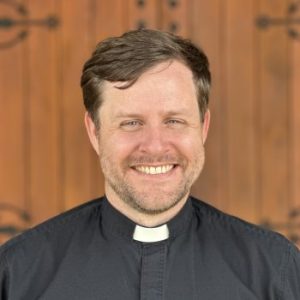
Alex Wilgus
Fr. Alexander Wilgus is rector of Redemption Anglican Church in The Colony, TX, host of the Word & Table podcast, and Program Director of Saint Paul’s House of Formation.
Credo Magazine
Advertisment