He is now contemplating the Eternal God: The Fortitude and Magnanimity of Paul Helm
A few years ago, I was on the phone with Paul Helm when he told me that he was losing his ability to communicate his thoughts. To make matters worse, he also told me his memory was starting to fade at the same time. When I hung up the phone a deep sense of sadness entered the room. It seemed unfair. Here was a great mind, one capable of swimming in some of the deepest philosophical waters, only to see his intellect slip from his grasp by no choice of his own.
Around a year or so ago, I learned from Angela, Paul’s wife, that his state was now worse. Even still, Paul was still trying to write an endorsement for a book of mine. A book endorsement seemed so unnecessary under the circumstances, but Paul’s determination to help only served to increase my affection for him. Such an accomplished scholar, now at the end, and yet selfless as ever.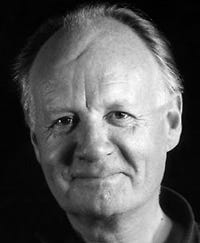
If you have not heard, Paul is now with his Lord, and our Lord, at last seeing face-to-face the one he spent his life contemplating. May he now rest in the everlasting peace of his Savior, contemplating the eternity of his Lord. Yet in his heavenly joy, others who knew him and loved him now grieve on earth. We should remember his family as they suffer this loss most of all.
I met Paul at a pivotal time in my life: seminary. Paul came to teach a course in philosophy, which gave the two of us the opportunity to spend time together in person. I’ve never forgotten how he patiently entertained what must have seemed to him like elementary questions about philosophical theology from someone just beginning. Paul had taught with the best at King’s College London back in the day and then at other schools like Regent. And yet, he took no little time to sit down and help a pilgrim barely on his way. Few know that Paul was one of the first to help me launch Credo. Many know him for his intellectual prowess, but I knew him for his generosity and humility as well.
I don’t know that many new students today have read Paul’s books, but he is a major reason why theologians like me came to a fork in the road—with revisionist evangelicalism to the left and classical theism to the right—and chose the road less travelled by. Back then evangelicals were flirting with open theism, yet even many of those who reacted against open theism were not retreating to classical theism but inventing some new modification of it. Paul saw through it all. He was one of those few voices standing up for pure classical theism in a day when few evangelicals understood it well. To this day, I’m still unsure those who appreciate him fully understand that Paul’s defense of classical theism was metaphysical at heart. I hope that becomes more apparent as others consider Paul’s legacy.
Paul’s stance took no little courage. For example, in 2008 a book hit the press called Perspectives on the Doctrine of God, in which Paul took on Bruce Ware, Roger Olson, and John Sanders all at once. By the time I finished the book it became clear that everyone but Paul was either trying to revise classical theism or discard it altogether. In a move with striking perspicuity, Paul introduced the A-Team as he affectionately called it—Augustine, Anselm, Aquinas—and drew a line in the sand, essentially telling his opponents, You either stand with the A-Team or you don’t. (Paul spent much of his future exploring the ways classical theism influenced the Reformed Scholastics.) That took some valor in a day when so many were enamored with tinkering classical theism.
Yet Paul’s fortitude was already well-known. Previously, at the turn of the century, Paul had jousted with William Lane Craig and Nicholas Wolterstorff, once against defending God’s timeless eternity against those who entertained a God who is temporal in one respect or another (see Paul’s chapters here). But there Paul stood, once again, waiving the banner of classical theism, even if it meant standing alone.
Looking back, it is now clear that Paul was ahead of his time—dare I say, even prophetic. He was defending the credibility of classical theism long before some evangelicals grew disenchanted by the revisionist project. However, Paul was not staying the course for social media likes or a YouTube following, nor was he trying to create a brand or achieve the respect of his peers. In fact, not a few disliked Paul for his stubborn defense of classical theism against innovation. But if you knew Paul, then you understood that he was standing by classical theism because he knew it was true to reality, which explains why he had such an affinity for the metaphysics of Thomas Aquinas.
When I first started teaching classical theism to seminary students, first overseas and eventually back in the States, Paul Helm’s Eternal God: A Study of God Without Time(Oxford University Press) became a staple for my students. I wanted them to see that classical theism is not only to be defended on biblical grounds but has an ancient philosophical pedigree that has endured every modern assault. Plus, I wanted them to feel like they were not alone; an intellect as significant as Paul Helm’s stands with them. But what I did not tell my students is that I was trying my best to follow Paul’s example, however poor my attempt was by comparison to Paul himself.
Fortitude and magnanimity—two virtues not often held together—stand out as I reflect on my time with Paul Helm. What conversations he blessed us with he now enjoys on a level we cannot imagine. With the Great Tradition he is now contemplating the Eternal God.
Until we meet again, Paul.
-Matthew Barrett
For those readers unfamiliar with Paul Helm, you may enjoy the following conversations on Credo:
What good is philosophy for theology? Credo podcast
God without weakness: Paul Helm defends divine impassibility—written interview.
Who is afraid of Thomas Aquinas? Part 1. Part 2. Part 3. Review.
What is the reformed view of free will? Credo podcast
What is philosophical theology, and why is it important for the church today? Written interview
Matthew Barrett
Advertisment