Dad, why are we kneeling?
Theologian Greg Peters recently said to me in a conversation, “If the prayer of humble access does not make you an Anglican, I don’t know what will.” I found this to be so true in my life. Maybe you have, too. To kneel to receive Jesus’ body and blood. Have you thought about this? To kneel before our Lord, to stretch out your hands, to receive his means of grace. This is the posture of a sinner.
I remember when my children first started to ask questions: “Dad, we’re going forward now. How does this work?” Dad failed to inform them and when they knelt down they didn’t know what to do with their hands. Patient, our rector said to them, “Give me your hands. Turn them this way. Receive God’s grace.” Does this not embody what we pray? “We do not presume to come to this your table, O merciful Lord, trusting in our own righteousness, but in your abundant and great mercies. We are not worthy so much as to gather up the crumbs under your table; but you are the same Lord whose character is always to have mercy” (Book of Common Prayer).
On our knees, with outstretched hands, we are but beggars.
There is no place for power and pomp, but only weakness. To receive the sacrament of our Lord, the sacrament of holy Eucharist that preserves us unto everlasting life, you must know this one thing: I am a sinner. Then you will be ready to be nourished by the once for all sacrifice of Christ’s body and blood. Then you will be ready to participate in the real presence of our Lord.
I was privileged to deliver the Eucharist homily at Trinity Anglican Seminary. You can watch the whole service, but you can also jump to my homily at 22 minutes. Here I contemplate Jesus calling Matthew, the tax collector, to be his disciple, and the presumption of the Pharisees who look on with judgmental eyes. I believe this passage prepares us to kneel and stretch out our hands “to eat the flesh” of Jesus Christ and “to drink his blood…” (BCP).
Did you know I preach at St. Aidan’s Anglican Church in Kansas City at least once a month as well? We just started Exodus and I was handed the colossal task of chapters 3-4. In these two chapters Moses encounters that bush which burns with the holy presence of divinity but without being consumed, which Gregory of Nyssa thinks prefigures the womb of the virgin Mary (see his Life of Moses). I then turned to I AM WHO I AM, and considered how this name fortifies Moses with that central truth: God is his existence. I put forward the real distinction in us, the creature, between essence and existence, much in contrast to our God who is simple. On this bedrock Moses can be confident the Creator of the cosmos who spoke reality into being ex nihilo can do those signs and wonders required to liberate God’s people. But then, in a plot twist, the story ends with God seeking to strike Moses down. Bitter Moses, who was clear he did not want to be Israel’s deliverer, refused to circumcise his son (!), only for his wife to intercede with the sacrament of the covenant. I consider how monumental this moment is if God is to demand Pharaoh release his firstborn son, Israel.
If you would like to listen to other homilies I have delivered, you might be curious about my ascension Sunday homily where I explain what the ascension has to do with ordination to the priesthood from 1 Peter 5.
But if I had to pick one homily recently where I was moved within the depths of my own being, it would have to be the Easter homily. On that early morning, I took the church to the tomb, except we experienced its emptiness through the eyes of Mary Magdalene who is weeping. To which her Lord responds, Whom are you seeking, Mary? We went back in time to explore Mary’s past as a sinner and why she, perhaps more than others, cherished the grace of her Lord in her heart.
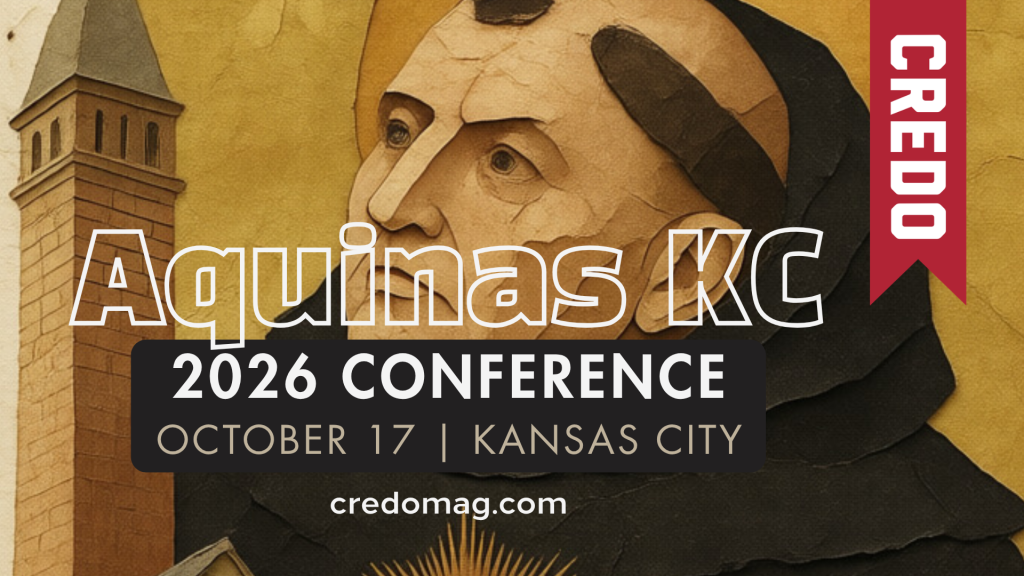
I love preaching. I sense I am closest to the Holy Spirit when I proclaim Christ and him crucified. But I also love a good lecture. On October 17th I will be speaking at Aquinas KC with Dominic Legge, O.P., who is president of Dominican House of Studies. I am Anglican. He is Catholic. But together we will gather around Aquinas right here in Kansas City at Donnelly College, asking how Aquinas can help us answer the pressing questions of our culture, such as: how can I flourish as a human being and what does my happiness have to do with my search for God? Register asap as seating is limited.
Join us this Fall, October 17th, for Aquinas KC. Register here to hear Matthew Barrett, Dominic Legge, and many others talk about The Happy Life: Human Flourishing and the Search for God. Seating is limited, so register soon!
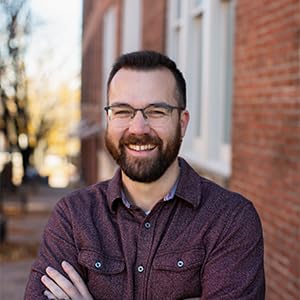
Matthew Barrett
Advertisment