“See to it that no one takes you captive by philosophy and empty deceit, according to human tradition, according to the elemental spirits of the world, and not according to Christ” (Colossians 2:8; ESV throughout). So warns Paul in his letter to the church at Colossae, but what did he mean by his warning? Did he intend to cast suspicion on all forms of philosophy? Since the threat to the church seems to have been an internal one, Paul almost surely was not referring to Greek philosophers teaching in the tradition of Plato, Aristotle, Epicurus, or Zeno.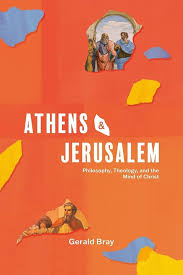
In any case, when Paul gave his apologetical speech at the Areopagus in Athens, he was able to establish common ground with his Stoic and Epicurean audience before attempting to lead them upward to the truth of Christ’s death and resurrection (Acts 17:22-31). The fact that only a few of his listeners accepted the gospel does not negate the existence and reality of that common ground. Paul, after all, taught that pagans had real, if limited access to God’s glory and moral standards through the witness of creation (Romans 1:19-20; compare with Psalm 19:1-4) and the writing of God’s law on their conscience (Romans 2:15). He also assured a group of pagans in Lystra that “[i]n past generations, [God] allowed all the nations to walk in their own ways. Yet he did not leave himself without witness, for he did good by giving you rains from heaven and fruitful seasons, satisfying your hearts with food and gladness” (Acts 14:16-17).
By means of general revelation, a theological concept accepted by both Aquinas and Calvin, the ancient Greeks philosophers had access to truths about the nature of God, man, and the universe. In the absence of special revelation, however, they lacked the knowledge of God’s plan of salvation for the Jews and the world. So much can biblical-creedal Christians agree on. But to what extent can believers learn from pagan philosophy? Can a study of Plato’s Republic or Aristotle’s Nicomachean Ethics draw a reader toward real, eternal truths that are compatible with Christianity? Is it not only not wrong for Christians to study the pagans; can doing so be a positive, faith- and wisdom-enhancing exercise? Was Tertullian right to suggest that Athens (Greco-Roman literature, philosophy, and culture) and Jerusalem (the teachings of Christ, the Bible, and the Church) have little to do with one another?

I was hoping that Gerald Bray’s Athens & Jerusalem: Philosophy, Theology, and the Mind of Christ would offer definitive answers to such questions, but it only does so in part. Despite his title, Bray’s concern is more with philosophy and theology in general than with the extent to which real truths can be learned from an interaction with Plato and Aristotle. That is not in itself a bad thing. Bray offers an excellent, carefully researched, highly lucid history of philosophy and theology from the Pre-Socratics to the modern day. Athens & Jerusalem would make a fine textbook for a high school, undergraduate, or graduate student wanting to understand the key figures and issues in that history and how each figure interacted with those who came before.
Still, Bray does offer, along the way, insights into the Athens/Jerusalem dialogue that are worth attending to. Accordingly, I will, in this review, highlight and examine some of Bray’s comments that support, challenge, and/or complicate that dialogue. In his opening chapter, Bray does well to remind his readers that though it is generally true “that the Roman Catholic and Eastern Orthodox traditions place a greater emphasis on philosophy, and especially on Greco-Roman philosophy, than most Protestants” (3-4), the Reformers who broke with the Catholic church did not break fully with pagan philosophy. Indeed, he argues, both Catholics and Reformers “were ready to use Greek categories of thought, derived mainly from Aristotle, but with strong elements of Plato as well, as the framework for expressing their ideas” (4).
This is an important admission on Bray’s part, one that suggests some knowledge of Platonic and Aristotelian terminology is needed for a proper understanding of New Testament doctrine, but he quickly qualifies it by critiquing two modern movements that would increase, rather than decrease, Hellenic influence on the faith. First, he warns against a desire to recover the authentic early church by emphasizing mystical theology. In a later chapter, Bray links this to the medieval distinction between apophatic theology, which can only speak of what God is not, and cataphatic theology, which believes that we can express truths about God, often by way of analogy. “Systematic theology as we understand it is cataphatic; apophatic theology, by contrast, is what we would now call mysticism” (101).
At the root of apophatic theology lie the writings of pseudo-Dionysius, an anonymous Christian of Neoplatonic convictions who wrote around 500 in the name of Dionysius the Areopagite, he who was converted by Paul’s sermon in Athens (Acts 17:34) and, according to tradition, became the first bishop of Athens. Bray is tough on pseudo-Dionysius, accusing him of consciously deceiving his readers into believing he was the Areopagite and of plagiarizing from the pagan Neoplatonist Proclus (99).
But he does praise him for transcending Neoplatonism by seeking “to go beyond mere being to a higher level of consciousness, which is the ultimate experience of reality” (102). Bray then claims that “[n]othing like this can be found in classical philosophy” (102), though we catch glimpses of it in the transfiguration of Christ and when Paul is caught up to the third heaven (2 Corinthians 12:2-4), experiences that transcend language. Though I get Bray’s point here, I would argue that Plato gives us pagan glimpses of just such transcendence in his myths from Symposium and Phaedrus, not to mention in his Allegory of the Cave.
Bray’s tendency throughout is to downplay the degree of true wisdom accessible to unregenerate pagan philosophers who lacked access to the Bible, but he does accord them a preparatory role, one that he locates, rightly, in pseudo-Dionysius. “Philosophy (and, indeed, cataphatic theology) was an important, even necessary, preparation for knowing God. It trains the mind to think straight, to analyze reality in a coherent way and to seek continually for greater and deeper understanding. Properly understood and used, philosophy points beyond itself and gives the intellect a thirst for the knowledge of God that can only come through revelation” (102). Again, I get the point and agree with it, but let us not forget that the medieval concept of the beatific vision, best expressed by Aquinas, has deep roots in Plato and Aristotle, both of whom ranked the life of contemplation of the Forms/the Unmoved Mover as superior to the life of action.
Bray makes a similar point about Boethius, who “laid the groundwork” for systematic theology by applying Aristotle’s “principles of logic” to “biblical revelation.” “Systematic theology in the Christian sense,” he argues, “was alien to ancient Greek philosophy, but thanks to Boethius and those who followed him it became a natural component of later Christian thought—philosophy, as medieval writers taught, was indeed to become the handmaid of theology” (99). Plato and Aristotle, that is to say, can get us started—perhaps in the same way that medieval theologians studied Virgil as a way of strengthening their Latin so they could read the Vulgate and Latin Fathers—but they should know their proper place and not get too big for their britches.
And that carries us back to Bray’s opening chapter and to the second warning he issues about the growing interest in the Hellenic origins of Christianity: “the Protestant theologian Hans Boersma (1961-) has claimed that Christianity would not exist in its present form without the input of what he calls ‘Christian Platonism,’ and has even gone so far as to say that without it the Bible cannot be properly understood. He thinks that biblical scholars generally, and Protestant ones in particular, have discounted the importance of philosophy for understanding the Bible and wants them to be more open to what amounts to an allegorical reading of the text” (5).
Bray takes umbrage to Boersma’s claims and even lightly ridicules them. In doing so, he forgets that Jesus came in the fullness of time (Galatians 4:4)—a fullness that not only manifested itself in terms of Roman law, order, and unity, but Greek philosophy. God chose the Greek language as the vehicle for the New Testament, rather than the Aramaic which Jesus spoke, and that Greek was as undergirded by Platonic and Aristotelian thought and terminology as Roman unity was by Alexander the Great’s dream of universal empire—a dream that laid the foundations for the great city of Alexandria, where the Hebrew scriptures were translated into Greek.
Granted that the allegorical readings of some of the medieval, and early church, fathers could be quite fanciful, Paul himself was not above indulging in some unexpected and decidedly bizarre interpretations of Sarah and Hagar in Genesis (Galatians 4:21-26) and the water from the rock in Exodus (1 Corinthians 10:1-4). More generally, Paul’s typological readings of the Old Testament are central to explicating the sacred narrative that connects the two testaments (or covenants) between God and Israel and God and the Church. Typology is inherent in God’s salvific work in human history, but Paul, in making use of it, mimics, whether consciously or not, the writings of the Hellenic Jew Philo of Alexandria, who built a philosophical/theological bridge between Plato and the Bible. In the same way, the author of Hebrews, almost surely unconsciously, offers a Platonic vision of reality when he explains that the temple in Jerusalem is a copy (or imitation) of the true (form of the) temple in heaven (see Hebrews 8:5).
Despite these connections between pagan Greek philosophy and the Bible, Bray seems to agree strongly with the view that he ascribes—fairly and, I think, accurately—to Luther, Calvin, and others: “The Protestant Reformers had a negative view of ancient pagan philosophy because it was non-Christian and they rejected any attempt to use it for the construction of their theology” (154). I find this rejection a sad and unnecessary one, given the fact that Abraham accepted the divine name, God Most High, used by the gentile Melchizedek and incorporated it into his “theology” (Genesis 14:22), that Moses was instructed in all the wisdom of the Egyptians (Acts 7:22) and took administrative advice from his pagan father-in-law Jethro (Exodus 18), and that Paul quotes the pagan poet Epimenides and identifies him as a prophet (Titus 1:12).
Why then the rejection, or at least strong suspicion, of pagan philosophy as an aid to the proper interpretation of scripture? A possible answer can be found in Bray’s treatment of medieval philosopher and theologian Peter Abelard. Abelard, Bray explains, encountered Aristotelian logic through Boethius’s translation of Categories and soon submitted “everything apart from the Bible to searching criticism based on the logical principles he had picked up from Aristotle” (127). But Abelard ran afoul of Bernard of Clairvaux who outed him for seeking “understanding in order to confirm his faith,” rather than “using his faith to seek understanding, as Anselm had done” (128). With reference to this disagreement, Bray makes a comment that reveals his own views on the matter: “Bernard was one of the few medieval thinkers who was unequivocally admired by the Protestant Reformers, who saw in him a kindred spirit” (128). (I find it ironic that Bernard got high marks from the Reformers, despite having written a famous, or infamous, series of sermons in which he allegorized away the physical/sexual aspects of the Song of Songs.)
Although he never references the apologetical school of presuppositionalism, Bray seems to hail from that school, or at least mindset. Whereas classical apologists like C. S. Lewis find no problem moving from understanding (based on general revelation and natural law that they share with “virtuous” pagans like Plato and Aristotle) to faith (the presentation of the gospel), presuppositionalists like Cornelius Van Til and John Frame insist on beginning with faith (the special revelation of scripture) and only then moving on to more generic arguments compatible with common grace.
Not surprisingly, Bray takes Luther’s side in the debate between Luther and Erasmus. What is more surprising is that he justifies Luther’s rebuke of Erasmus by comparing it to Anselm’s rebuke of his pupil Boso: “You have not yet considered how great the weight of sin is” (148). Later, he quotes the rebuke again as a way of accounting for the inability of modern secularists to explain or extirpate the problem of evil (260). While I fully agree with Bray that the problem with man is sin, disobedience, and rebellion (not, as Rousseau thought, ignorance and poverty), I do believe he presses too far the noetic effects of sin on our ability to reason within the confines of general revelation and natural law. Sin, after all, did not destroy the imago Dei in man.
Were Bray to read his book again through the lens of our deeply marred but not effaced imago Dei—allowing us to see, in the phrasing of the KJV, through a glass darkly—I think he would discover something quite revealing. Whereas the last four centuries of philosophers have hardly been supportive of biblical theology, those who were more Platonic or Aristotelian in their vision (Descartes, Pascal, Berkley, Paley) came much closer to the truth than those who broke more sharply with Athens (Spinoza, Hobbes, Locke, Hume, Kant, Hegel). Furthermore, and more subtly, those who sowed confusion and error by abandoning Plato and Aristotle in favor of the Pre-Socratics (Neitzche, Heidegger) bear witness to a truth that I think Bray, the Reformers, and the presuppositionalists would find problematic: namely, that the pagans were not equally dark in their thinking, but that Plato, Aristotle, Cicero, and the Stoics saw more clearly than the others. Let us not forget that the materialist vision of nature propagated by Marx, Darwin, and Freud agrees with the first century BC Roman Epicurean poet Lucretius but disagrees with Plato.
I hope that readers of this review will not think that I am disparaging Bray or his book. The history of philosophy and theology that he offers in Athens & Jerusalem is well-conceived and well-executed and performs a much-needed service for Christians, particularly evangelicals. Too often, books on philosophy are either too dry and technical to engage lay readers, or, like Will Durant’s Story of Philosophy, they are lucid and bracing but woefully, almost comically secular. Bray combines the strengths of Francis Schaeffer and Mortimer Adler, but he is more careful and exacting than either. Think of him as the Calvinist flip side to the Catholic Peter Kreeft, with both sharing the same passion for truth, understanding, and the gospel.
Like Lewis before him, Bray balances well the ineffable mystery of God with the abundant evidence for His self-revelation. The Creator is both wholly other and Emmanuel (“God with us”), very far away and very near. Share on XLet me end this review by praising Bray for one of his most helpful insights, while yet pointing out that a similar insight can be gained by reading closely Plato’s Timaeus, by way of Augustine and Boethius, by way of C. S. Lewis. Bray’s insight offers a compelling response to apophatic theologians who overemphasize our inability to understand, or at least find an analogy for understanding, a God who lives outside of time and space. Against such claims, Bray argues that “human language is capable of expressing things that go beyond the limitations of time and space and is therefore capable of grasping truth about God, even if that truth can never be exhaustive. In our everyday speech, the default position is the present: ‘I am.’ We take this everywhere we go, and it is our conscious response to everything we experience. We move through time, of course, but our sense of the present never leaves us” (323).
The present, senior devil Screwtape teaches his novice nephew Wormwood, “is the point at which time touches eternity. Of the present moment, and of it only, humans have an experience analogous to the experience which our Enemy [God] has of reality as a whole; in it alone freedom and actuality are offered them” (Screwtape Letters, XV). Like Lewis before him, Bray balances well the ineffable mystery of God with the abundant evidence for His self-revelation. The Creator is both wholly other and Emmanuel (“God with us”), very far away and very near. And that is why a proper study of the twin legacies of Athens and Jerusalem instills intellectual humility while making possible the formation of doctrines, creeds, and systematic theology.
Image Credit: Tony Hisgett | Flickr
Credo receives money from qualifying purchases made via links on this website.

Louis Markos
Louis Markos is Professor in English and Scholar in Residence at Houston Baptist University, holds the Robert H. Ray Chair in Humanities; his 22 books include From Plato to Christ: How Platonic Thought Shaped the Christian Faith (IVP, 2021), From Achilles to Christ (IVP, 2007), Literature: A Student’s Guide (Crossway, 2012), On the Shoulders of Hobbits (Moody, 2012), and Pressing Forward: Alfred, Lord Tennyson and the Victorian Age (Catholic University of America Press, 2002).
Credo Magazine
Advertisment