In 1120, Hugh of St. Victor wrote a treatise on education for the incoming students at the Abbey of St. Victor in Paris. This didactic work, the Didascalicon, follows a long tradition of writings focused on how a student should enter into the arts and discipline of education. In some ways, it was orientation for entering studies at St. Victor. Although it references the line of Augustine, Boethius, Cassiodorus, Bede, Alcuin, and others, Hugh expands the focus and purpose of wisdom and what the pursuit of knowledge should look like. Hugh explains the objective and telos of learning, the content of the curriculum, the foundation of Scripture, and the roles of the theoretical, linguistic, practical, and mechanical arts.
Jim Halverson describes the distinctive structure of the Didascalicon: “Hugh understands all fields of knowledge, from theology to manufacturing techniques, as integral parts of God’s redemptive process. According to Hugh, all learning, and all work informed by learning, is the uniquely human response to and cooperation with God’s work of restoring a fallen creation. According to this vision, learning contributes to the restoration of the entire Christian person, as well as to the larger restoration of society.” Hugh himself writes, “Of all human acts or pursuits, then, governed as these are by Wisdom, the end and the intention ought to regard either the restoring of our nature’s integrity, or the relieving of those weaknesses to which our present life lies subject.” (51-52) The purpose of growing in Wisdom is to push back the effects of the Fall. Hugh provides further rationale by saying, “This, then, is what the arts are concerned with, this is what they intend, namely, to restore within us the divine likeness, a likeness which to us is a form but to God is his nature. The more we are conformed to the divine nature, the more do we possess Wisdom, for then there begins to shine forth again in us what has forever existed in the divine Idea or Pattern, coming and going in us but standing changeless in God.” (61)
Hugh makes this point repeatedly: there is a direct connection between what we learn, why we learn, and the physical and spiritual fight against the world, the flesh, and the devil. He also helpfully explains the process of learning in that “The things by which every man advances in knowledge are principally two—namely, reading and meditation.” (44) Hugh later states what is necessary for that pursuit:
“Three things are necessary for those who study: natural endowment, practice, and discipline. By natural endowment is meant that they must be able to grasp easily what they hear and to retain firmly what they grasp; by practice is meant that they must cultivate by assiduous effort the natural endowment they have; and by discipline is meant that, by leading a praiseworthy life, they must combine moral behavior with their knowledge.” Note that knowledge leads to action, or as he wrote in another section, that knowledge “will thereafter transform into action.” (50) Hugh makes this point repeatedly: there is a direct connection between what we learn, why we learn, and the physical and spiritual fight against the world, the flesh, and the devil. Share on X
He further states that “Those who work at learning must be equipped at the same time with aptitude and with memory…Aptitude gathers wisdom, memory preserves it” (91), and that “Aptitude gets practice from two things—reading and meditation.” (91) Regarding meditation, he says, “The start of learning, thus, lies in reading, but its consummation lies in meditation.” (93)
He emphatically makes this point when he says, “I charge you, then, my student, not to rejoice a great deal because you may have read many things, but because you have been able to retain them. Otherwise there is no profit in having read or understood much.” (94)
In addition, the disposition of the learner must be one of humility. Or as Hugh explains, “Now the beginning of discipline is humility. Although the lessons of humility are many, the three which follow are of especial importance for the student: first, that he hold no knowledge and no writing in contempt; second, that he blush to learn from no man; and third, that when he has attained learning himself, he not look down upon everyone else.” (94-95)
Hugh is expounding a certain type of pace and depth of learning—one that favors quality over quantity. Share on XHugh is expounding a certain type of pace and depth of learning—one that favors quality over quantity. While addressing the nature of learning, its purpose, and the heart of the student, Hugh also describes what the curriculum should contain. He sets forth the classical seven liberal arts and the necessity of the quadrivium (arithmetic, geometry, music, and astronomy), and not just the trivium (grammar, logic, and rhetoric). He writes, “It is in the seven liberal arts, however, that the foundation of all learning is to be found. Before all others these ought to be had at hand, because without them the philosophical discipline does not and cannot explain and define anything. These, indeed, so hang together and so depend upon one another in their ideas that if only one of the arts be lacking, all the rest cannot make a man into a philosopher. Therefore, those persons seem to me to be in error who, not appreciating the coherence among the arts, select certain of them for study, and, leaving the rest untouched, think they can become perfect in these alone.” (added emphasis) (89) Hugh writes individual sections on each of the arts of the trivium and the quadrivium, which significantly argues for all seven—something that the current classical renewal has been slow to embrace. Without all seven, the trajectory of classical education is in danger of veering off course.
Hugh includes a description of the seven mechanical arts: fabric making, armament, commerce, agriculture, hunting, medicine, and theatrics. Learning is more than academic and mental, and these broad sections illustrate how the work of our hands fulfill the creation mandate and also push against the effects of the Fall.
The Didascalicon is imminently practical. Hugh helpfully explains the nature of learning, the process of attaining wisdom, and the path towards it. The disposition of the student and the practical explanations of how to read, how to approach Scripture, and how to integrate memory and meditation are timeless insights making the Didascalicon relevant, accessible, and required reading for students and educators.
Notes:
Jim Halverson, “Restored Through Learning: Hugh of St. Victor’s Vision for Higher Education”, Christian Scholar’s Review, 41:1, 35-50
Hugh. The Didascalicon of Hugh of St. Victor: A Medieval Guide to the Arts. Columbia University Press, 1991.
Photo Credit: Peter Rivera
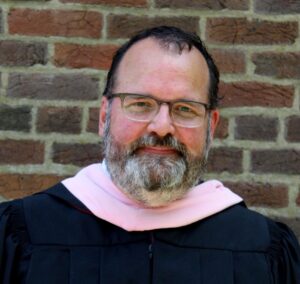
Gregory Wilbur
Gregory Wilbur is the Founder, permanent Trustee, Dean of Students, and Senior Fellow at New College Franklin. In addition to his role at New College Franklin, Mr. Wilbur is the Chief Musician of Cornerstone Presbyterian Church (PCA) and is the author and contributor to several books, numerous articles and speaks regularly on the arts, worship, and education at various conferences and schools. Mr. Wilbur has composed award-winning works for choir, orchestra, film, and corporate worship as well as various commissions. He recently released his fifth CD of congregational hymns called Praise Your Maker.
Credo Magazine
Advertisment